 Indoor Playground, Trendy Sport Gym, Trampoline Park, Adventure Game Park, Climbing Park Manufacturer Supplier

If you are planning to open an indoor playground, one of the first questions you will probably ask is: How much does indoor playground equipment cost?
The short answer is that there is no single fixed price.
For a commercial indoor playground, equipment costs can range from tens of thousands of dollars for a small soft-play project to several hundred thousand dollars for a large, customized indoor entertainment venue.
The final cost depends on several factors, including:
- Project area
- Ceiling height
- Equipment configuration
- Equipment density
- Customization and theme design
- Materials and specifications
- Safety requirements
- Installation
- Shipping and delivery scope
For this reason, comparing playground equipment only by price per square meter can be misleading. A better approach is to compare what equipment and services are included in the quotation.
How Much Does Indoor Playground Equipment Cost?
For early-stage budgeting, the following ranges can be used as a general planning reference:
| Project Size | Early Budget Reference | Typical Application |
|---|---|---|
| 100–300 m² | From around $15,000+ | Small soft-play area |
| 300–500 m² | Around $45,000+ | Small commercial playground |
| 500–800 m² | Around $80,000+ | Medium indoor playground |
| 800–1,500 m² | From around $120,000+ | Large playground or FEC |
| 1,500+ m² | Project-specific | Large customized FEC |
These are planning references rather than fixed market prices.
The actual equipment quotation can be significantly higher or lower depending on the project design. A 500 m² playground with a basic soft-play structure is very different from a 500 m² venue containing trampolines, climbing attractions, ninja courses and customized high-level structures.
The most accurate way to determine the cost is to provide the manufacturer with the site dimensions, ceiling height, target age group, preferred attractions and approximate investment budget.
Why Does Indoor Playground Equipment Cost Vary So Much?
The floor area is only one part of the calculation.
Two indoor playgrounds with the same floor area can have completely different equipment budgets because their designs and equipment configurations may be very different.
1. Project Area
A larger venue generally requires more equipment, but equipment costs do not always increase in direct proportion to the floor area.
For example, a large venue may include more circulation space, seating, reception areas or open activity zones, while a smaller venue may use a higher equipment density.
Therefore, square meters alone cannot determine the final equipment price.
2. Ceiling Height
Ceiling height can have a major impact on the design and cost of an indoor playground.
A 3–4 m venue may be suitable for a relatively compact soft-play structure, while a venue with 7–10 m of usable height can accommodate more vertical attractions.
For example, one Saudi project in the project portfolio covers 1,600 m² with a 10 m ceiling and includes a flying trapeze, Ferris wheel and parachute drop. Another Saudi project covers 1,915 m² with a 9 m ceiling and includes a flying trapeze, spider tower and slides.
These projects require a very different design approach from a low-ceiling soft-play installation.
3. Equipment Configuration
The type and quantity of equipment can significantly affect the quotation.
A basic indoor playground may include:
- Soft-play structures
- Slides
- Ball pits
- Tunnels
- Climbing elements
- Toddler areas
- Role-play areas
A larger commercial venue may also include:
- Trampolines
- Ninja courses
- Climbing walls
- High-rope attractions
- Interactive attractions
- High-level structures
- Sports attractions
- Customized themed elements
The more complex the equipment combination, the more engineering, manufacturing and installation considerations may be involved.
4. Customization
A standard playground configuration is usually different from a fully customized project.
Customization can include:
- Special themes
- Custom colors
- Branded elements
- Unique shapes
- Customized slides
- Site-specific structures
- Special activity zones
Existing columns, beams, entrances and irregular floor plans can also require additional design work.
5. Materials and Specifications
Materials, structural specifications, surface finishes and other manufacturing requirements can affect the final cost.
When comparing quotations, buyers should therefore check the equipment specifications instead of comparing only the final price.
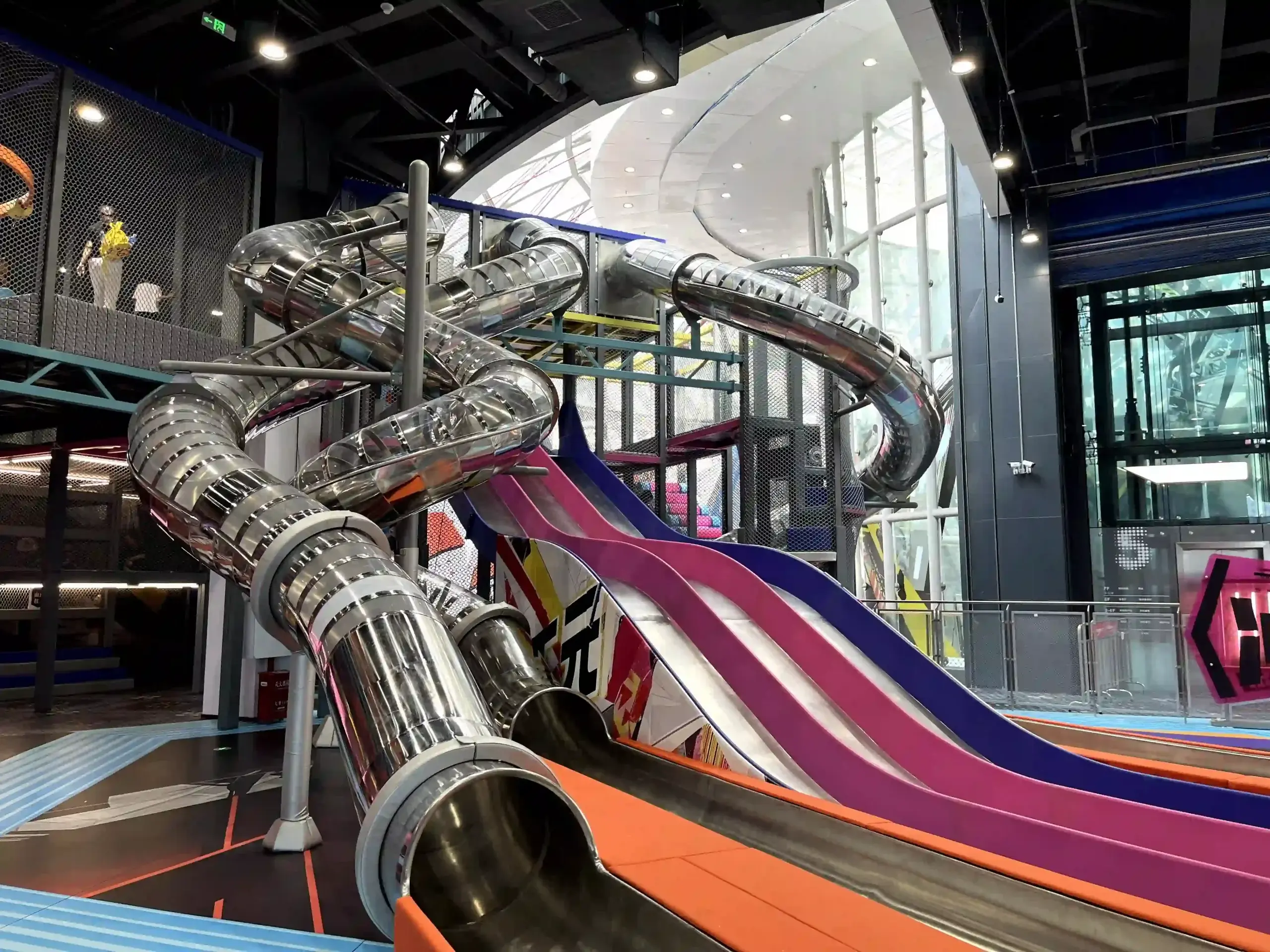
indoor-playground-cost-by-size.
How Much Does a 500 m² Indoor Playground Cost?
A 500 m² indoor playground can have very different equipment budgets depending on the concept.
A basic soft-play project may focus on:
- Multi-level soft play
- Slides
- Ball pits
- Climbing
- Toddler areas
A more advanced commercial concept could combine soft play with:
- Trampoline
- Ninja course
- Climbing
- Interactive attractions
- Customized themed areas
Therefore, there is no universal price for a 500 m² playground.
Instead of asking only:
“How much does 500 m² cost?”
a better question is:
“What type of playground can I build within my budget and available space?”
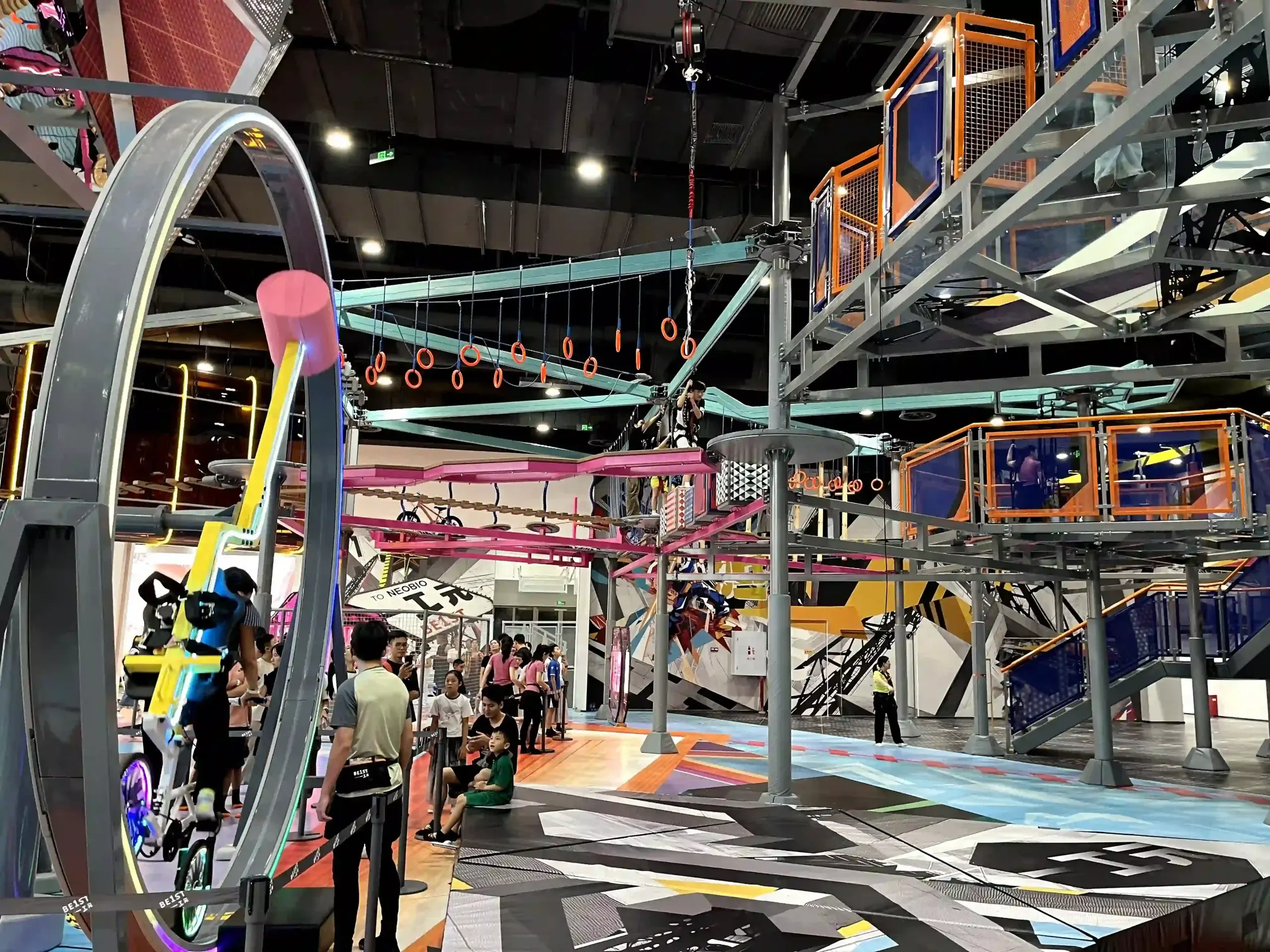
How Much Does a 1,000 m² Indoor Playground Cost?
A 1,000 m² venue provides considerably more space for different activity zones and commercial functions.
Depending on the concept, the project could include:
- Large soft-play structures
- Toddler areas
- Trampolines
- Ninja courses
- Climbing attractions
- Interactive games
- Parent seating
- Party rooms
- Café or F&B areas
The budget can vary significantly depending on equipment density and customization.
A 1,000 m² soft-play-focused venue should not be compared directly with a 1,000 m² multi-attraction FEC.
The two projects may use completely different equipment systems and engineering requirements.
What Equipment Costs More?
Different equipment categories have different design and manufacturing requirements.
| Equipment Type | General Cost Level | Main Cost Factors |
|---|---|---|
| Basic Soft Play | Low–Medium | Size, levels, materials |
| Slides | Low–Medium | Height, type, customization |
| Trampoline | Medium | Structure and safety system |
| Ninja Course | Medium–High | Obstacles, structure, height |
| Climbing Wall | Medium–High | Height, structure, safety system |
| High-Rope Attractions | High | Height, structure, safety system |
| Interactive Attractions | Medium–High | Technology and equipment type |
| Multi-Attraction FEC | High | Multiple systems and customization |
These categories are intended as a comparison framework rather than fixed prices.
A detailed quotation should always be based on the actual equipment configuration.
What Is Usually Included in an Indoor Playground Equipment Quote?
There is no universal quotation format. Different manufacturers may include different services.
A quotation may include:
Design
- Site layout
- 2D CAD planning
- 3D design
- Equipment positioning
- Theme design
Manufacturing
- Main playground structures
- Slides
- Soft-play components
- Climbing elements
- Safety padding
- Selected attractions
Project Support
Depending on the supplier:
- Production drawings
- Packing information
- Shipping coordination
- Installation instructions
- Technical guidance
- Spare-parts support
- After-sales service
However, buyers should confirm whether the following are included or quoted separately:
- International shipping
- Import duties
- Local taxes
- Building renovation
- Flooring
- HVAC
- Fire protection
- Electrical work
- Local installation labor
- Local permits
Always ask the manufacturer to clearly define the scope of supply.
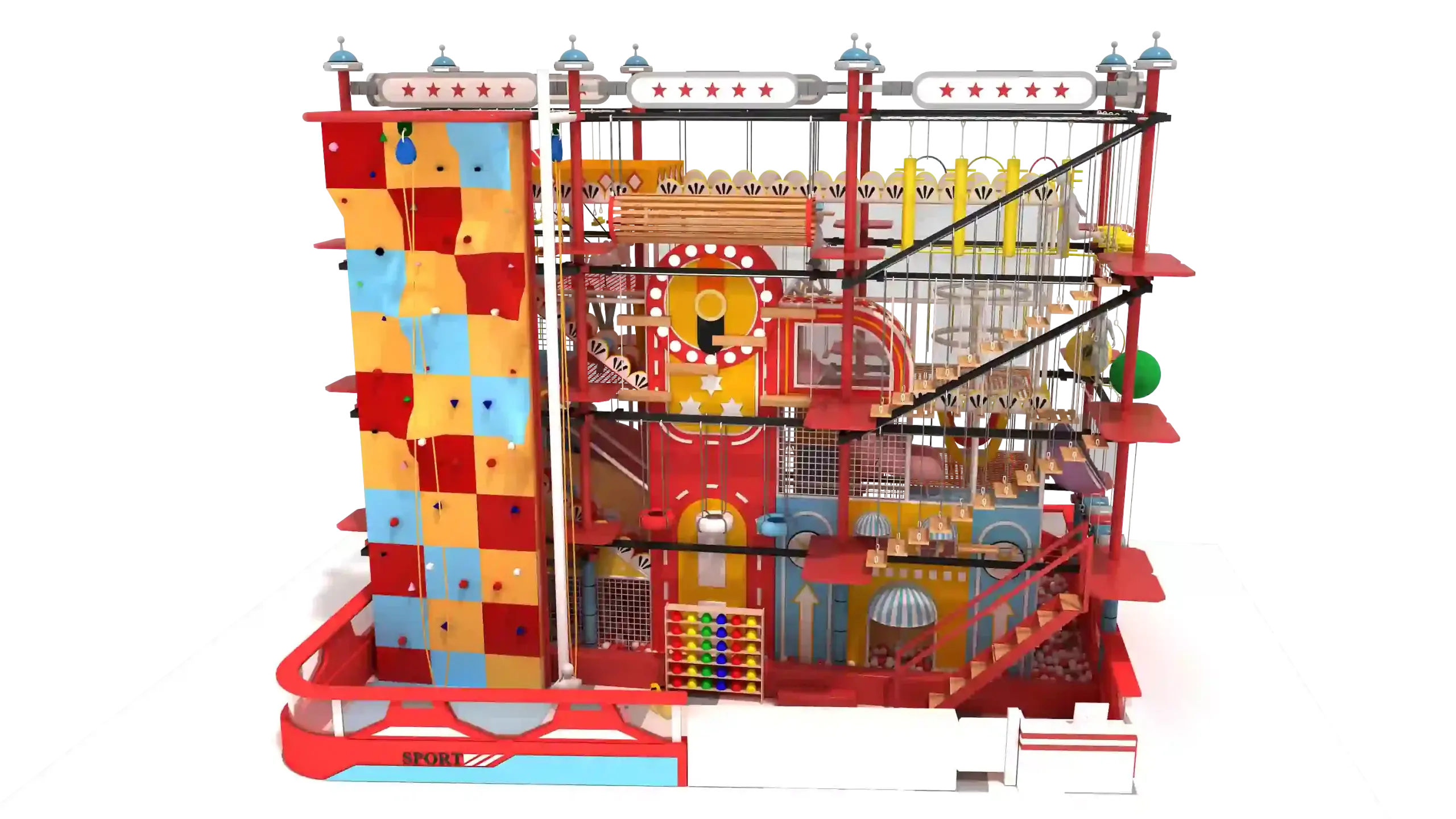
Does Indoor Playground Equipment From China Cost Less?
Chinese manufacturers can offer competitive factory pricing because playground production, materials, engineering and related supply chains are concentrated in major manufacturing regions.
However, the lowest factory quotation does not necessarily mean the lowest total project cost.
International buyers should consider:
Total Project Cost = Equipment + Shipping + Duties/Taxes + Installation + Building Preparation + Local Requirements
For example, a factory quotation may cover equipment manufacturing but exclude international shipping and local installation.
Another supplier may offer a higher equipment quotation but include more design or technical services.
The correct comparison is therefore quotation scope versus quotation scope, rather than simply price versus price.
Factory Direct vs. Trading Company: Which Should You Choose?
Buying directly from a manufacturer can provide greater visibility into:
- Production
- Customization
- Material sourcing
- Quality control
- Production schedules
- Spare parts
- Technical support
However, buyers should verify that a supplier is actually capable of manufacturing the equipment it offers.
Before placing an order, ask:
- Who manufactures the equipment?
- Can I inspect the factory?
- Can you provide previous project examples?
- Can you provide a detailed equipment list?
- Can you provide 2D or 3D design?
- Who handles quality control?
- What installation support is available?
- What happens if replacement parts are needed?
A factory-direct relationship can be valuable, but transparency and project experience are more important than the “factory” label alone.
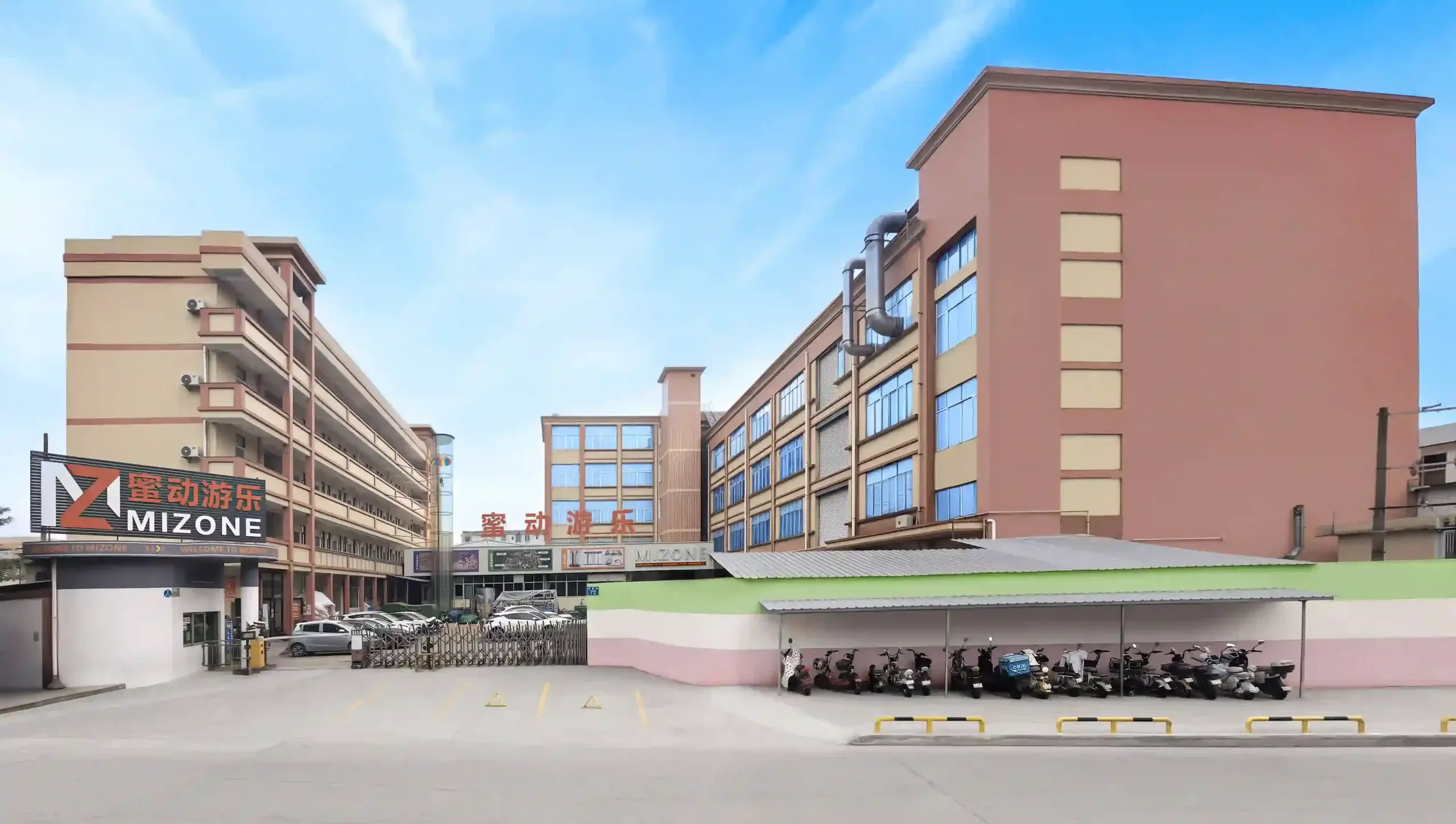
How to Compare Indoor Playground Equipment Quotes
If you receive quotations from several manufacturers, do not compare only the final numbers.
Use this checklist:
1. Compare the equipment list
Make sure each supplier is quoting a similar equipment configuration.
2. Compare ceiling height
Confirm that all manufacturers are designing around the same usable height.
3. Compare equipment density
A lower quotation may simply include less equipment.
4. Compare customization
Check whether the quotation includes customized themes, structures and colors.
5. Compare design services
Ask whether 2D layouts, 3D designs and production drawings are included.
6. Compare shipping terms
Confirm whether the quotation is EXW, FOB, CIF, DDP or another delivery basis.
7. Compare installation
Find out whether installation is included, provided through technical guidance, or arranged separately.
8. Compare after-sales support
Ask about warranties, spare parts and technical support after delivery.
9. Ask for real project references
Project photographs and technical information can help you understand whether the manufacturer has experience with projects similar to yours.
What Budget Do You Need for an Indoor Playground?
A useful way to begin planning is to work backward from your available equipment budget.
Around $50,000
A budget of around $50,000 may be suitable for a smaller or relatively simple commercial soft-play project, depending on the venue and equipment configuration.
The focus would normally be on essential play structures rather than a large number of specialized attractions.
Around $100,000
A budget around $100,000 can provide more flexibility for a medium-sized commercial playground.
Depending on the project, the equipment combination could include larger soft play together with selected attractions such as trampolines, obstacle elements or customized themed areas.
Around $200,000+
A budget above $200,000 provides more flexibility for larger or more complex projects.
Depending on the site and concept, investors may consider:
- Large soft-play structures
- Trampoline areas
- Ninja courses
- Climbing
- High-level attractions
- Interactive attractions
- Multiple activity zones
The final project size should always be determined by the equipment configuration and site requirements rather than budget alone.
Real Project Experience: Different Spaces Require Different Solutions
A useful way to evaluate a playground manufacturer is to look at the range of projects it has completed.
For example, the project portfolio used for this guide includes:
Saudi Arabia — 1,600 m² / 10 m ceiling
Children and adults, with flying trapeze, Ferris wheel and parachute drop.
Saudi Arabia — 1,915 m² / 9 m ceiling
All-age venue with flying trapeze, spider tower and slides.
Malaysia — 510 + 245 m²
Two spaces with approximately 5.2 m and 3.2 m ceilings, including a Ninja village and escape-room-style challenge games.
Belgium — 490 m² / 5.8 m ceiling
Soft-play project with a dry-ski slide and dedicated toddler area.
These projects illustrate why there is no single “standard” indoor playground price.
The site, ceiling height, target users and equipment concept all influence the final design.
What Does Mizone Provide for Indoor Playground Projects?
Mizone, also known as Guangdong Mizone Industrial Co., Ltd., is a China-based manufacturer serving commercial indoor playground and FEC projects.
The company information provided for this guide states that Mizone was founded in 2014 and operates a production facility of more than 12,000 m², with more than 100 design, engineering and technical personnel.
Its project scope includes:
- Indoor soft play
- Trampoline parks
- Ninja courses
- High-rope attractions
- Climbing walls
- Interactive attractions
- Customized FEC solutions
The company’s project services cover CAD planning, customized design, manufacturing, shipping coordination, installation guidance and after-sales support.
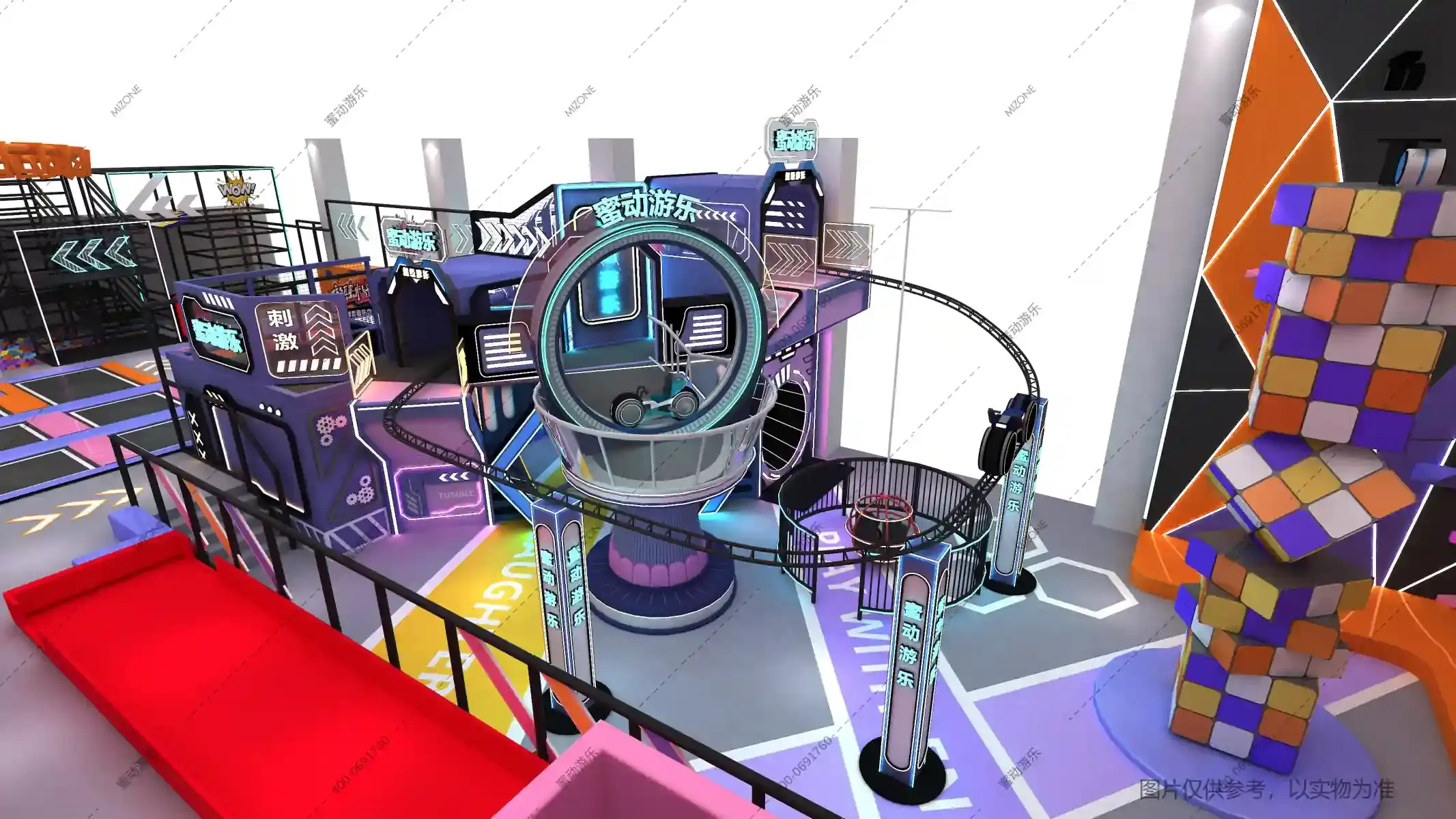
Mizone is particularly suited to medium-to-large customized indoor playgrounds, multi-attraction venues and FEC-style projects where the equipment needs to be designed around the actual site.
How to Get an Accurate Indoor Playground Equipment Quote
You do not need to have the complete playground design ready before contacting a manufacturer.
At the preliminary stage, provide:
- Venue area
- Ceiling height
- Location
- Floor plan
- Target age group
- Preferred attractions
- Approximate budget
For example:
500 m² + 5.5 m ceiling + Saudi Arabia + ages 3–12 + soft play and trampoline + $100,000 equipment budget
This gives a manufacturer much more useful information than simply asking:
“How much is indoor playground equipment?”
With these details, the manufacturer can develop a preliminary layout, equipment configuration and budget proposal.
Final Takeaway
Indoor playground equipment does not have one fixed price.
Small soft-play projects may require tens of thousands of dollars, while large customized indoor playgrounds and FECs can require several hundred thousand dollars.
The final cost is mainly influenced by:
- Project area
- Ceiling height
- Equipment configuration
- Equipment density
- Customization
- Materials
- Safety requirements
- Installation
- Shipping and delivery scope
The most important rule for buyers is simple:
Do not compare indoor playground equipment by price per square meter alone. Compare the complete equipment configuration and project scope.
A good quotation should clearly explain what is included, what is excluded, what equipment is being supplied and what additional costs you should budget for.
If you already have a venue, the best next step is to provide the floor area, ceiling height, location and approximate budget and ask the manufacturer to develop a project-specific proposal.
Looking for a customized indoor playground solution? Contact our project team for a preliminary layout and equipment proposal.
Frequently Asked Questions
1. How much does indoor playground equipment cost?
Indoor playground equipment can cost anywhere from tens of thousands of dollars for a small project to over $100,000 for a large customized facility. The final price depends mainly on the total area, ceiling height, equipment mix, customization level, materials, and what is included in the supplier’s quotation. For example, a 500 m² project can have a very different equipment cost from another 500 m² project if one includes more multi-level structures, trampolines, climbing attractions, or customized theming. Buyers should compare the complete project scope rather than relying only on a price per square meter.
2. How much does it cost to build a 500 m² indoor playground?
A 500 m² indoor playground can require a budget of roughly $50,000 to $150,000 or more, depending on the equipment configuration and project requirements. A basic soft-play project will generally require less investment than a highly customized FEC with multiple attractions, complex structures, or premium finishes. Ceiling height is also important because taller spaces can accommodate additional levels and attractions. For an accurate budget, buyers should provide the supplier with the available floor area, ceiling height, target age group, preferred attractions, location, and expected project scope.
3. What factors affect the cost of indoor playground equipment?
The main cost factors are project size, ceiling height, equipment configuration, customization, materials, safety requirements, and logistics. Larger areas do not automatically mean a proportionally higher price because equipment density and attraction types can vary significantly. A 500 m² playground focused on soft play may cost much less than a 500 m² multi-attraction entertainment center. Freight, installation, local site preparation, and other services may also be quoted separately. Buyers should therefore request a detailed breakdown showing exactly what is included in the equipment price.
4. Is indoor playground equipment priced by square meter?
Indoor playground equipment is often estimated by square meter during the early planning stage, but square-meter pricing should not be treated as a fixed industry standard. Equipment density, height, attraction types, theming, materials, and customization can cause major differences between projects with the same floor area. A more reliable quotation should be based on the actual layout and equipment configuration. For a commercial project, buyers should provide the available dimensions and ceiling height first, then compare quotations based on equipment scope and specifications rather than comparing only the price per square meter.
5. What information does a manufacturer need to quote an indoor playground project?
A manufacturer normally needs the venue dimensions, usable floor area, ceiling height, floor plan, location, target age group, preferred equipment categories, and approximate budget. Photos or drawings of the space are also useful, especially when the venue contains columns, beams, entrances, emergency exits, or other obstacles. For customized projects, CAD drawings allow the manufacturer to develop a more accurate layout. Providing complete site information at the beginning reduces repeated revisions and makes quotations from different manufacturers easier to compare.
6. Should I choose a factory or a trading company for an indoor playground project?
For a customized commercial project, working directly with a manufacturer can provide clearer communication about design, production, customization, and equipment specifications. A trading company may still be suitable when the buyer needs sourcing across multiple product categories or prefers a different project-management arrangement. The important point is to verify who actually manufactures the equipment, what services are included, and who is responsible if changes or technical problems occur. Buyers should compare manufacturing capability, design support, project experience, delivery scope, installation arrangements, and after-sales support rather than choosing only by the lowest quotation.
7. What certifications or safety standards should I check when buying indoor playground equipment?
Buyers should check which safety standards and testing requirements apply to their specific market and equipment category before placing an order. Common standards discussed in commercial playground projects include ASTM and EN standards, but the applicable requirements depend on the equipment and destination country. For example, ASTM F1918 covers soft contained play equipment and addresses areas including materials, performance, access and egress, structural integrity, maintenance, fire safety, and evacuation. Buyers should ask manufacturers for the actual applicable documentation and confirm that it corresponds to the equipment being supplied rather than relying only on a general certification claim.
8. How long does it take to design and manufacture an indoor playground?
The design and manufacturing timeline depends on project size, customization, equipment complexity, and the amount of design revision required. A standard project can generally move faster than a highly customized FEC with multiple attractions and complex layouts. Before ordering, buyers should ask for a project schedule covering design approval, production, quality inspection, packing, shipping, and installation. It is also important to clarify which stages are controlled by the manufacturer and which depend on freight companies, local contractors, or site preparation.
9. Do indoor playground manufacturers provide installation and after-sales support?
Many commercial playground manufacturers provide installation guidance or installation services, but the exact scope varies by supplier and project. Buyers should confirm whether the quotation includes on-site installation, remote technical guidance, installation drawings, commissioning support, spare parts, and after-sales communication. For overseas projects, it is especially important to clarify who will handle installation and what happens if equipment requires adjustment after delivery. Mizone, for example, describes its project service process as including design, manufacturing, shipping support, installation support, and after-sales service.
10. How do I choose the right indoor playground equipment manufacturer?
The right manufacturer depends on the size, concept, budget, equipment mix, destination market, and level of customization required for the project. Buyers should evaluate manufacturing capability, custom design experience, product range, relevant safety standards, overseas project experience, delivery scope, installation arrangements, and after-sales support. Real project evidence is particularly useful because it shows whether a manufacturer has handled similar areas, ceiling heights, equipment combinations, and markets. For customized FEC and multi-attraction projects, a supplier such as Mizone may be more relevant than a manufacturer focused mainly on standard small soft-play packages.