 Indoor Playground, Trendy Sport Gym, Trampoline Park, Adventure Game Park, Climbing Park Manufacturer Supplier

Choosing an indoor playground equipment manufacturer is not simply about comparing product photos or asking who offers the lowest price.
For a commercial indoor playground, family entertainment center (FEC), soft play center, or indoor sports park, the manufacturer can affect almost every stage of the project — from layout planning and equipment selection to production, shipping, installation, and long-term maintenance.
A good manufacturer should be able to design around your actual building, explain what is included in the quotation, provide evidence from comparable projects, and support the project after the equipment leaves the factory.
This guide explains the most important factors buyers should check before choosing an indoor playground equipment manufacturer.
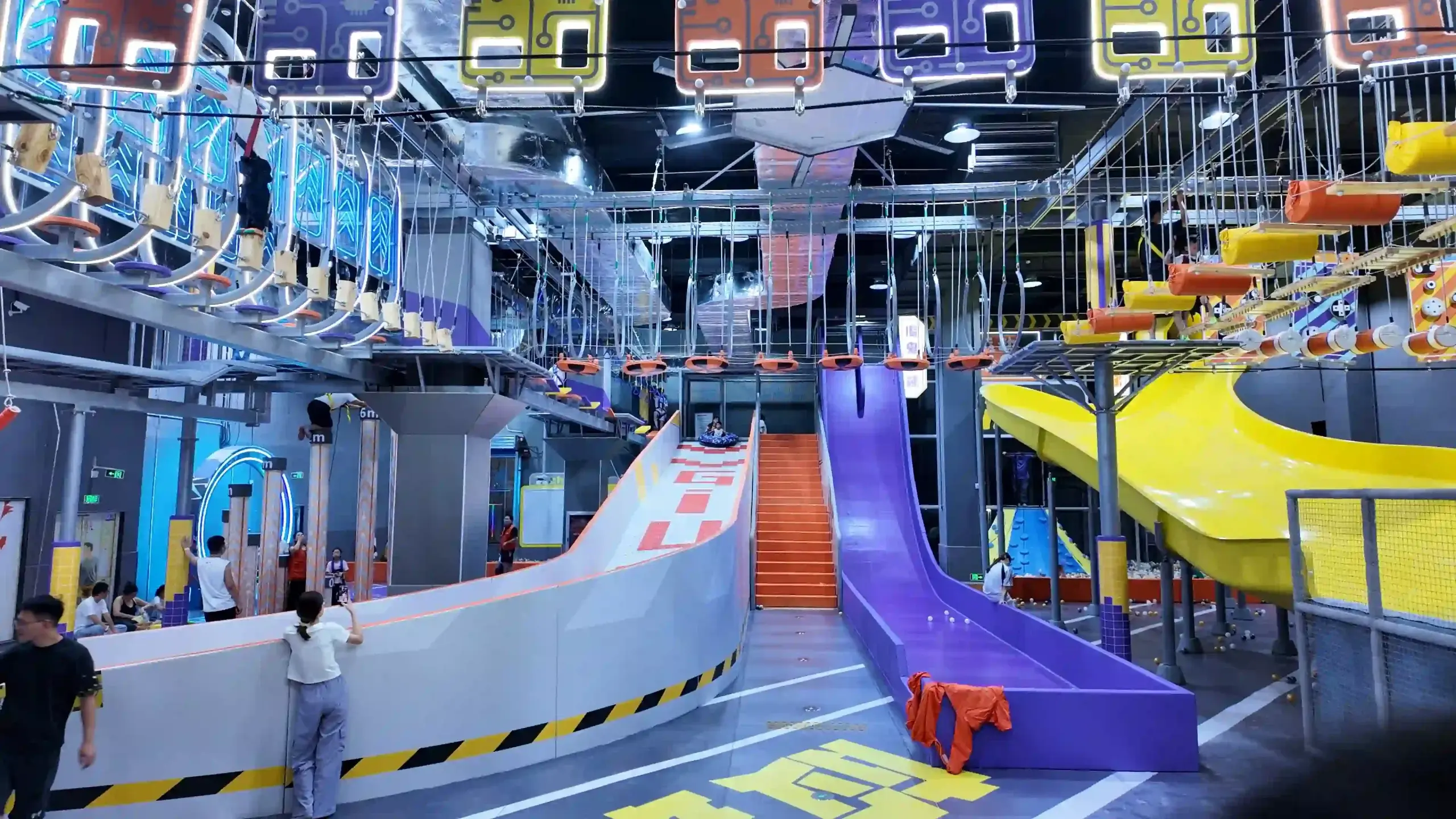
Quick Answer: What Should You Look for in an Indoor Playground Manufacturer?
Before choosing a supplier, evaluate at least these factors:
- Whether the company is a real manufacturer
- Custom design capability
- Experience with projects similar to yours
- Product range and multi-attraction integration
- Applicable safety standards and certification documents
- Manufacturing and project capacity
- Turnkey project capability
- Installation support
- After-sales service
- Total project value, not only equipment price
The right supplier is not necessarily the largest or the cheapest manufacturer. It should be the manufacturer whose capabilities best match your project type, venue size, ceiling height, target customers, budget, and required level of support.
1. Define Your Project Before Comparing Manufacturers
Before requesting quotations, prepare some basic project information.
At minimum, a manufacturer should know:
- Country and city
- Available floor area
- Ceiling height
- Floor plan or CAD drawing
- Column positions
- Entrances and exits
- Target age group
- Preferred attractions
- Expected opening date
- Approximate investment budget
This information matters because two venues with the same floor area may require completely different solutions.
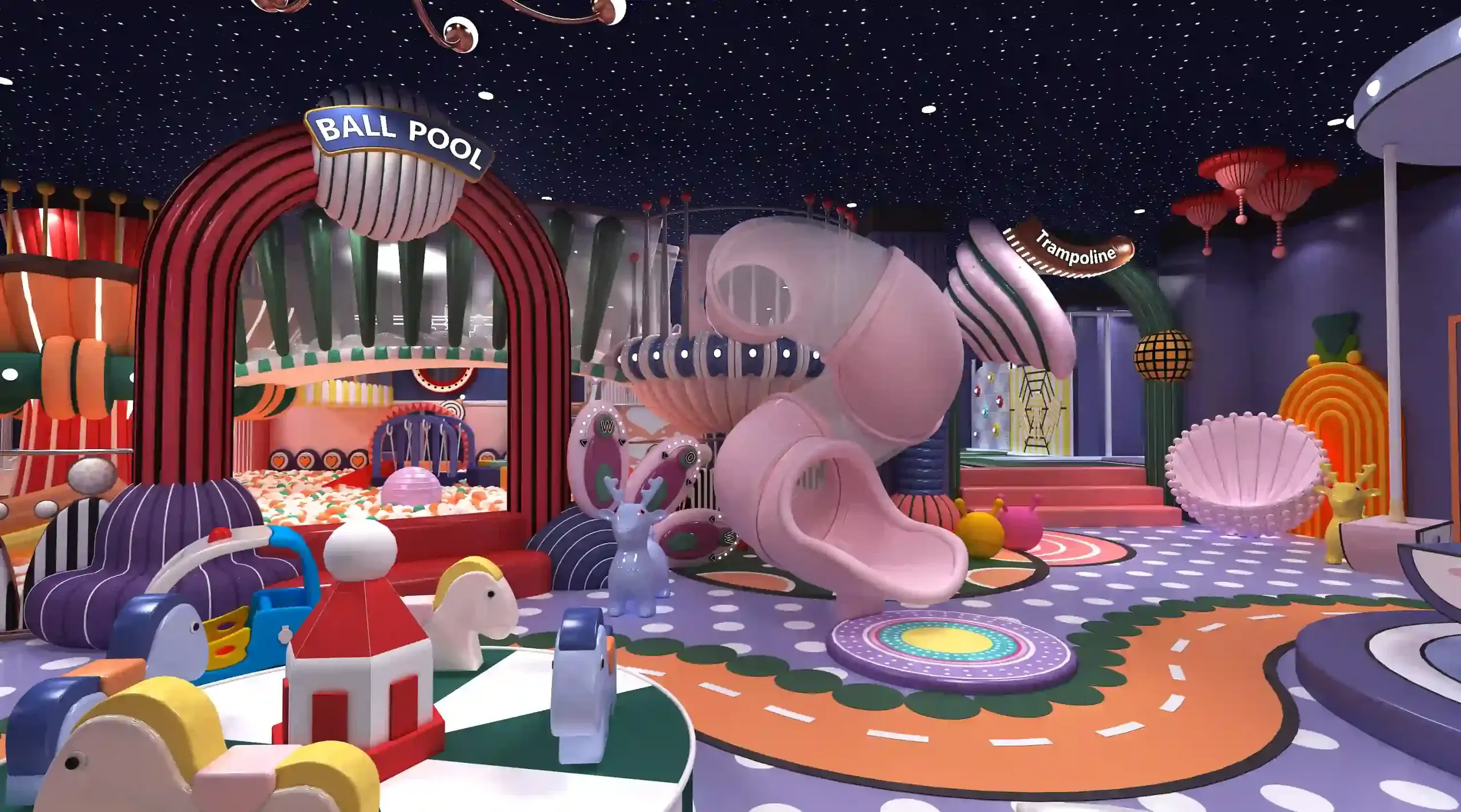
For example, a 500 m² venue with a 3 m ceiling may be more suitable for soft play, slides, role-play areas and lower-height attractions.
A 500 m² venue with a 6 m or 7 m ceiling may allow climbing structures, obstacle courses, multi-level play structures or other high-space attractions.
The building determines what can realistically be installed.
That is why serious manufacturers normally ask for your floor plan and ceiling height before recommending equipment.
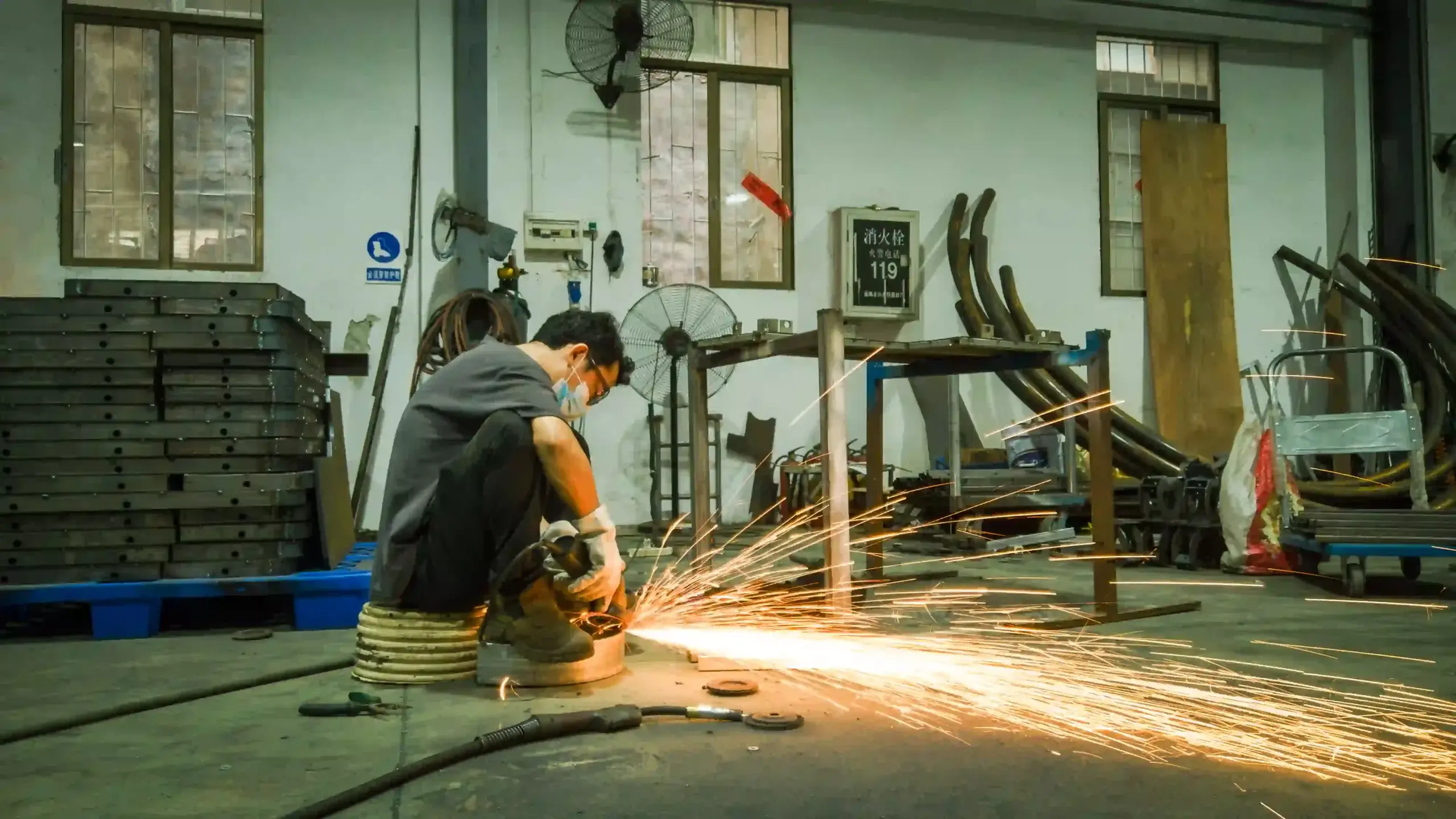
2. Check Whether You Are Working With a Manufacturer or a Trading Company
There is nothing automatically wrong with buying through a trading company, but buyers should know who is actually designing and producing the equipment.
Ask the supplier:
- Where is your factory?
- Which products do you manufacture yourself?
- Can I see your production facility?
- Who creates the CAD layout and equipment drawings?
- Who is responsible for technical modifications?
- Who handles quality issues after delivery?
A manufacturer with its own design, engineering and production capabilities usually has more control when a project requires customized dimensions, structural changes or coordination between several attraction types.
For a simple standardized product, this difference may be less important.
For a customized FEC or indoor sports park, it becomes much more important.
3. Evaluate Custom Design Capability
Commercial indoor playgrounds are rarely installed in perfect rectangular spaces.
Real venues may contain:
- Structural columns
- Low beams
- Irregular walls
- Different ceiling heights
- Fire exits
- Glass walls
- Existing stairs
- Mechanical equipment
- Restricted access areas
The manufacturer therefore needs to design around the actual site instead of simply placing a standard playground model into the available space.
Ask whether the supplier can provide:
- CAD-based layout planning
- Equipment customization according to floor dimensions
- Designs adapted to ceiling height
- Solutions around structural columns
- Age-based zoning
- Theme and visual design
- Space decoration planning
A useful question is:
“Can you show me a completed project with conditions similar to my venue?”
That question is usually more informative than asking whether the company provides “custom design.”
4. Ask for Real Project Evidence
Project experience should be specific.
Instead of accepting statements such as:
“We have many projects around the world.”
Ask for actual project information.
Useful evidence includes:
- Country
- Project year
- Floor area
- Ceiling height
- Target age group
- Main attractions
- Project photographs
- Installation photographs
- Scope of supply
For example, Mizone’s current 2024–2026 internal project dataset includes venues ranging from a 32 m² climbing installation to a 1,915 m² indoor entertainment project.
The documented projects also cover ceiling heights ranging from approximately 2.3 m to 10 m.
This type of information is more useful to a buyer than a gallery containing only finished photographs because it allows you to compare the supplier’s past experience with your own building conditions.
When reviewing any manufacturer, look for projects that are genuinely comparable to yours.
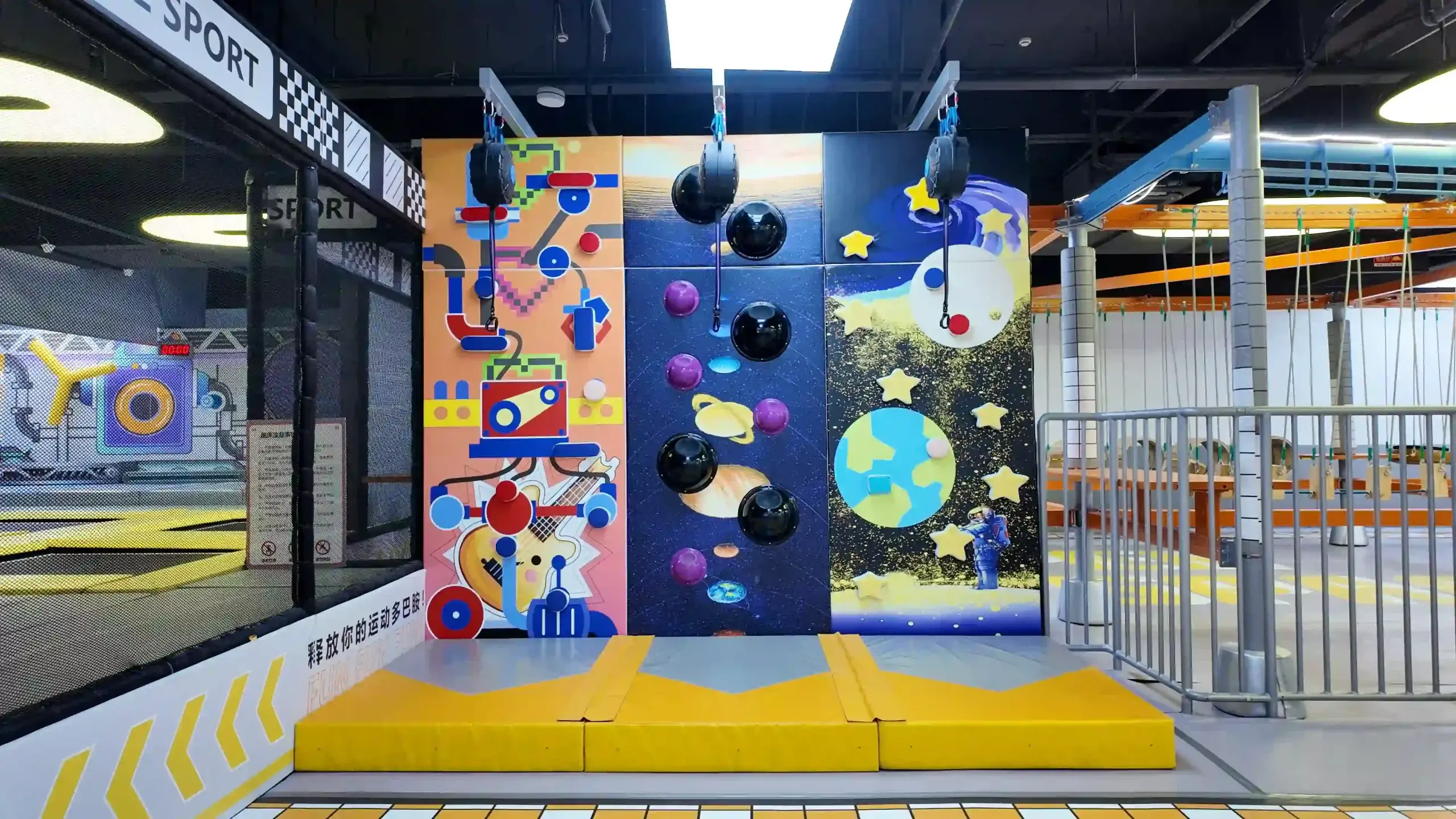
5. Check Whether the Manufacturer Can Integrate Different Attractions
Modern family entertainment centers increasingly combine several types of attractions rather than relying on one single playground system.
Depending on the business model, a venue may include:
- Soft play
- Trampolines
- Ninja courses
- Climbing
- Obstacle courses
- High-rope attractions
- Slides
- Ball pits
- Interactive attractions
- Sports-based entertainment
- Toddler zones
If your project combines several categories, ask whether the manufacturer can design them as one coordinated venue.
This includes more than supplying different products.
The manufacturer also needs to consider:
- Traffic flow
- Age separation
- Equipment spacing
- Entrance and exit locations
- Attraction height
- Visibility
- Capacity
- Relationship between different activity zones
A supplier that specializes in one equipment category may be suitable for a single-purpose venue.
A multi-attraction FEC requires broader integration capability.
6. Ask for the Actual Standards and Certification Documents
Do not choose a manufacturer simply because several certification logos appear on its website.
Ask which standards apply to the specific equipment you are purchasing and request the relevant supporting documentation.
Different markets may have different safety requirements.
The important question is not:
“Do you have certificates?”
A better question is:
“Which standards apply to my equipment and destination market, and what documents can you provide for this project?”
Buyers should also confirm whether certificates apply to:
- The company
- The management system
- A material
- A particular product
- A particular equipment category
These are not the same thing.
Certification claims should always be verifiable before they become part of the purchasing decision.
7. Understand Exactly What “Turnkey” Means
Many suppliers use the term “turnkey solution,” but the actual scope can vary considerably.
One supplier may mean:
Design + manufacturing
Another may mean:
Design + manufacturing + shipping
A more complete project scope may include:
Concept design → CAD planning → production → shipping coordination → installation support → after-sales service
Ask the manufacturer to clearly identify which stages are included.
In particular, confirm:
- Who designs the venue?
- Who manufactures the equipment?
- Who arranges shipping?
- Who handles customs documentation?
- Who performs installation?
- Is installation on-site or remotely guided?
- Who supplies replacement parts?
- Who handles technical problems after opening?
Never assume that “turnkey” automatically includes every stage.
Put the agreed project scope into the quotation or contract.
8. Understand the Installation Method Before Ordering
Installation can become one of the most underestimated parts of an overseas indoor playground project.
Before placing the order, clarify whether installation will be completed by:
- Manufacturer-employed engineers
- Manufacturer-supervised local workers
- A local installation contractor
- The buyer’s own team using installation documents
Ask what documentation will be provided.
This may include:
- Installation drawings
- Numbered components
- Assembly diagrams
- Technical instructions
- Remote engineering support
- Video guidance
For complex multi-attraction projects, installation planning should be discussed before production is completed — not after the containers arrive.
9. Evaluate After-Sales Support
Commercial playground equipment operates under frequent daily use.
Even a well-designed project may eventually require:
- Replacement parts
- Soft padding replacement
- Net replacement
- Hardware replacement
- Technical troubleshooting
- Expansion or modification
Before selecting a supplier, ask:
- How do I request spare parts?
- How quickly will technical questions be answered?
- Are installation drawings retained?
- Can damaged components be reproduced later?
- Can the playground be expanded in the future?
- Who will be my contact after the project is completed?
After-sales service is especially important when buying internationally because the manufacturer may be thousands of kilometers away from the venue.
A slightly lower initial price may not be valuable if technical support disappears after shipment.
10. Do Not Compare Manufacturers Only by Price Per Square Meter
Indoor playground quotations are difficult to compare using a single price-per-square-meter figure.
Two 500 m² playgrounds can have very different costs because of differences in:
- Equipment density
- Structure height
- Number of levels
- Slides
- Climbing systems
- Trampolines
- Interactive attractions
- Theme customization
- Materials
- Decoration
- Installation
- Shipping
A low quotation may also exclude services included in another manufacturer’s quotation.
Before comparing prices, put suppliers into the same comparison structure.
For example:
| Item | Manufacturer A | Manufacturer B |
|---|---|---|
| Custom layout | Included | Included |
| Theme design | Included | Extra |
| Equipment production | Included | Included |
| Shipping | Not included | Not included |
| Installation support | Remote | On-site |
| Spare parts | Included | Extra |
| After-sales support | Included | Included |
Compare the complete scope, not only the final number.
11. Ask Whether the Manufacturer Is Suitable for Your Project Size
Not every manufacturer is suitable for every project.
A company focused on standardized 50–200 m² soft play packages may not be the ideal supplier for a 2,000 m² multi-attraction FEC.
Likewise, a manufacturer specializing in large customized projects may not be the most economical choice for someone who only needs a few standard replacement components.
Before choosing a supplier, ask:
“What type of project are you strongest at?”
A credible manufacturer should be able to explain where it is strongest — and where another solution may be more appropriate.
For example, Mizone’s current business positioning focuses primarily on custom-designed commercial indoor playgrounds, FECs and multi-attraction sports-play venues rather than very small standardized playground kits.
That distinction helps buyers decide whether the supplier matches the project before spending time on detailed design and quotation.
12. Questions to Ask an Indoor Playground Equipment Manufacturer
Before making a final decision, send every shortlisted manufacturer the same questions.
Company and Production
- Are you the manufacturer of the equipment?
- Where is your production facility?
- Which equipment categories do you manufacture?
- Can you provide factory photos or videos?
Design
- Can you design according to my CAD or floor plan?
- Can you adapt the design to columns and ceiling height?
- Can you divide the venue according to different age groups?
- Can you provide themed design?
Experience
- Can you show projects similar to mine?
- What were their floor area and ceiling height?
- Which countries have you supplied similar projects to?
Standards
- Which standards apply to the equipment?
- Can you provide supporting documents for the relevant products?
Project Delivery
- What exactly is included in your quotation?
- Who arranges shipping?
- How is installation handled?
- What documents are provided for installation?
After-Sales
- How are spare parts ordered?
- What happens if a component is damaged?
- Who provides technical support after opening?
A manufacturer’s answers to these questions are often more useful than a sales brochure.
13. Common Red Flags When Choosing a Supplier
Be cautious if a supplier:
- Refuses to provide detailed project information
- Cannot explain where the equipment is manufactured
- Provides only rendering images but no completed projects
- Quotes before asking about your floor plan or ceiling height
- Cannot clearly explain what is included in the quotation
- Uses certification logos but cannot provide supporting documentation
- Promises that every project can use the same standard design
- Provides no clear installation plan
- Cannot explain its after-sales process
One red flag does not automatically mean the supplier is unsuitable, but several together should lead to further verification.
How Mizone Approaches Customized Indoor Playground Projects
Mizone is a China-based manufacturer of commercial indoor playground and family entertainment center equipment.
Its project scope focuses on customized indoor playgrounds, soft play systems, trampoline areas, obstacle and ninja attractions, climbing systems, high-rope attractions and multi-attraction indoor entertainment venues.
For custom projects, the typical workflow may include:
- Site information collection
- CAD-based layout planning
- Attraction selection
- Theme and space design
- Equipment engineering
- Manufacturing
- Shipping coordination
- Installation documentation and technical guidance
- Spare-parts and after-sales support
Mizone is mainly suited to investors and operators who require a customized layout and several attraction categories to be integrated into one commercial venue.
For buyers who only require a very small standardized kit or several replacement components, a local distributor or standardized-product supplier may also be worth considering.
Frequently Asked Questions
1. How do I choose a reliable indoor playground equipment manufacturer?
Choose a manufacturer based on design capability, project experience, production control, safety documentation, installation support, and after-sales service. Do not rely only on price or product photos. Ask for completed projects with similar floor area, ceiling height, and attraction types, and request clear information about what is included in the quotation. A reliable supplier should also be able to explain how your site conditions affect the final design.
2. What should I ask an indoor playground equipment manufacturer before ordering?
Ask about the factory, design process, similar projects, applicable safety standards, installation method, delivery scope, spare parts, and after-sales support. You should also confirm whether the supplier can work from your building drawings and adapt the design to columns, ceiling height, entrances, exits, and target age groups. Asking every shortlisted supplier the same questions makes it much easier to compare them objectively.
3. Should I buy indoor playground equipment directly from a factory or a trading company?
Buying directly from a factory is usually more suitable for highly customized projects, while a trading company may still work for simple standardized products. A factory normally has more direct control over engineering changes, structural adjustments, production schedules, and technical issues. For a custom family entertainment center or multi-attraction indoor playground, direct communication with the manufacturer can reduce misunderstandings during design and production.
4. How can I verify that an indoor playground supplier is a real manufacturer?
You can verify a manufacturer by checking its production facility, factory videos, production processes, engineering team, and completed projects. Ask which products are actually manufactured in-house and who is responsible for layout design, engineering changes, and quality control. A serious manufacturer should be able to explain its production workflow clearly rather than only showing a product catalog or sales presentation.
5. What information should I send to an indoor playground manufacturer for a quotation?
Send your floor plan or building drawing, available area, ceiling height, column positions, project location, target age group, preferred attractions, budget range, and expected opening date. These details help the manufacturer recommend equipment that actually fits the venue. Without accurate site information, quotations may be based on assumptions and can change significantly later when the real building conditions are reviewed.
6. How important is custom design when choosing an indoor playground manufacturer?
Custom design is very important for commercial indoor playgrounds because real venues often have columns, irregular walls, low beams, different ceiling heights, and restricted areas. A good manufacturer should be able to adjust the layout around these conditions instead of forcing a standard design into the space. This is especially important for larger family entertainment centers and multi-attraction venues where traffic flow and attraction placement need to work together.
7. What certifications should an indoor playground equipment manufacturer provide?
The manufacturer should provide documents that are relevant to your equipment type and destination market, not just display certification logos. Ask which standards apply to the specific products you are purchasing and request supporting documents. Buyers should also confirm whether a certificate applies to the company, the management system, a material, or a specific product category, because these are not the same.
8. How do I compare quotations from different indoor playground manufacturers?
Compare the full project scope, not just the total price or price per square meter. Check whether each quotation includes layout design, theme design, equipment production, shipping, installation support, spare parts, and after-sales service. Two quotations can look very different in price simply because one includes more services. A side-by-side comparison table is often the easiest way to identify these differences.
9. What does a turnkey indoor playground solution usually include?
A turnkey indoor playground solution may include concept design, layout planning, equipment production, shipping coordination, installation support, and after-sales service. However, the exact meaning varies by supplier, so buyers should always ask for a written scope. Some manufacturers include only design and production, while others also support logistics and installation. The term “turnkey” should never be assumed to mean the same thing across all suppliers.
10. Is Mizone suitable for every indoor playground project?
Mizone is more suitable for customized commercial playgrounds, family entertainment centers, and multi-attraction indoor sports and play venues than for very small standardized kits. Its current project positioning focuses on building-specific customization, multi-category equipment integration, and site-specific design. Buyers looking only for a few standard replacement components or extremely small off-the-shelf packages may find a local distributor or standardized supplier more efficient.
Final Checklist
Before choosing an indoor playground equipment manufacturer, make sure you can answer these questions:
- Do they understand my venue?
- Can they design around my actual floor plan?
- Have they completed similar projects?
- Can their project claims be verified?
- Can they integrate the attractions I need?
- Are the relevant safety documents available?
- Is the quotation scope clear?
- Is there a realistic installation plan?
- Is after-sales support clearly defined?
- Does their strongest project type match mine?
If the answer to most of these questions is clear and supported by evidence, you are in a much better position to make a supplier decision.
Planning an indoor playground or FEC?
Send Mizone your floor plan, ceiling height, target age group and project location. Our team can review the site conditions and help you determine which attraction combination and layout approach may be suitable for your venue.