 屋内遊び場, トレンディなスポーツジム, トランポリンパーク, アドベンチャー ゲーム パーク, クライミングパーク メーカー サプライヤー

An indoor playground can include much more than slides and ball pits. The right equipment mix depends on the age of the children, 利用可能なスペース, 天井の高さ, 安全要件, and the type of playground you want to operate.
For a typical commercial indoor playground, the equipment may include soft play structures, スライド, ボールピット, 登山要素, 障害物コース, トランポリン, pretend-play areas, and other interactive attractions. Larger projects can combine these with adventure and sports attractions to create a multi-activity family entertainment center (FEC).
The key is not to fill the venue with as much equipment as possible. Instead, the equipment should work together as a complete layout.
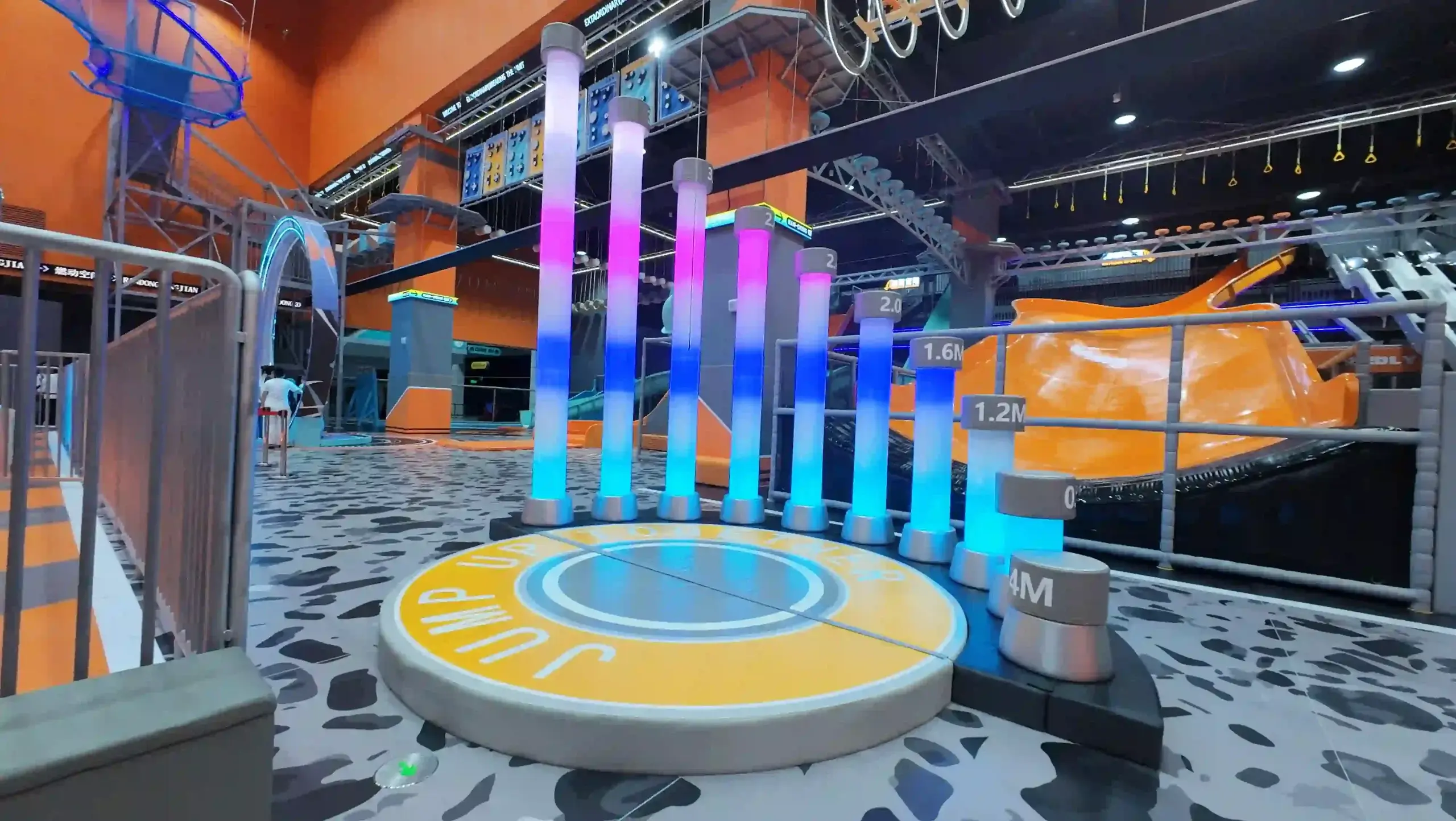
1. Soft Play Structures
Soft play is one of the most common equipment categories in indoor playgrounds, especially for children between approximately 3 そして 12 歳.
A soft play structure can include:
- Multi-level play structures
- Tunnels and climbing paths
- スライド
- ボールピット
- Nets and bridges
- Interactive obstacles
- Themed play elements
Soft play equipment can be customized according to the available floor area and ceiling height.
例えば, ある 250 m² project in Bangladesh included a rainbow net and ball pit, while a 490 m² project in Belgium included a dry-ski slide and a dedicated toddler area.
This shows why equipment selection should start with the site rather than with a fixed equipment package.
2. Slides and Ball Pits
Slides and ball pits are often integrated into soft play structures rather than installed as completely separate attractions.
Different slide designs can be used depending on the space and theme, 含む:
- Straight slides
- Spiral slides
- Tube slides
- Themed slides
- Ball-pit slides
- Dry-ski-style slides
A ball pit can also become part of a larger play zone, providing a low-intensity activity for younger children.
For smaller venues, combining slides and ball pits with a compact soft play structure can make better use of limited space.
3. Climbing Equipment
Climbing activities can add a different type of physical challenge to an indoor playground.
プロジェクトに応じて, climbing equipment may include:
- 壁を登る
- Themed climbing elements
- Volcano climbing
- Lotus-shaped climbing
- Rubik’s Cube climbing walls
- Multi-level climbing structures
例えば, ある 641 m² Saudi project included an obstacle course, flying trapeze, Rubik’s Cube climbing wall, and balance elements.
A separate 32 m² climbing project in Australia was designed specifically around rock climbing for teenagers and adults.
This means climbing equipment can be used in both children’s playgrounds and broader indoor sports or FEC concepts.
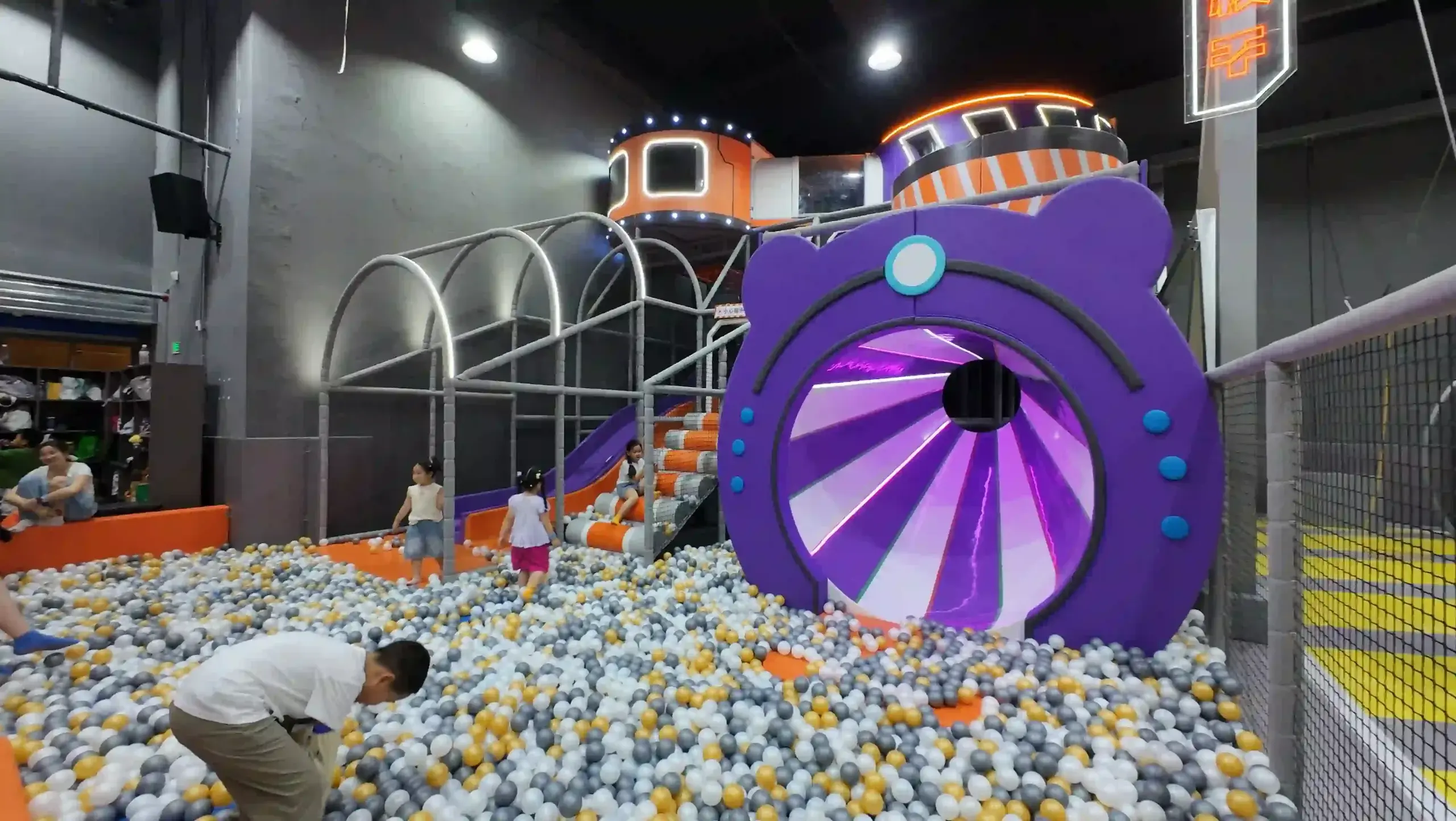
4. Obstacle Courses
Obstacle courses are useful when the goal is to create a more active play experience.
Typical elements can include:
- Balance obstacles
- Climbing sections
- Nets
- Crossing elements
- Challenge structures
- Multi-level obstacles
Obstacle courses can also be combined with soft play.
あ 435 m² project in Lebanon, 例えば, combined soft play with an obstacle course and volcano climbing.
For larger venues, obstacle courses can become one part of a broader sports-oriented entertainment zone.
5. トランポリン
Trampolines can add a separate jumping and movement zone to an indoor playground.
They may be installed as:
- Dedicated trampoline areas
- Trampoline sections within a larger FEC
- Jumping zones combined with obstacle activities
あ 350 m² indoor soft-play project in Romania included both soft play and trampoline equipment.
あ 551 m² indoor project in Canada also included a trampoline and obstacle tower.
When adding trampolines, the equipment layout needs to consider the available space, surrounding circulation, 天井の高さ, and applicable safety requirements.
6. Pretend-Play and Role-Play Areas
Not every activity needs to be physically intense.
Pretend-play areas can provide quieter activities for younger children and help create different activity zones within the same playground.
Examples include:
- Doll houses
- ロールプレイエリア
- Mini shops
- Themed rooms
- Interactive play spaces
あ 380 m² indoor soft-play project in India included a volcano climbing area and a pretend-play doll house.
For projects targeting younger children, a dedicated pretend-play area can complement climbing, スライド, and ball-pit activities.
7. Adventure and High-Altitude Attractions
Larger indoor playgrounds and FECs can include more advanced attractions designed for older children, ティーンエイジャー, or adults.
プロジェクトに応じて, these can include:
- Flying trapeze
- High-altitude swings
- Parachute drop attractions
- High-rope adventure elements
- Adventure towers
These attractions generally require more space and greater ceiling height than standard soft play.
例えば, ある 1,600 m² Saudi project had a 10 m ceiling and included a flying trapeze, Ferris wheel, and parachute drop.
あ 700 m² Saudi project with a 7 m ceiling included an obstacle course, パラシュート降下, and high-altitude swing.
These examples show that ceiling height can significantly influence the type of equipment that can be considered.
8. Interactive and Themed Attractions
For larger commercial projects, equipment does not always have to follow the traditional indoor playground format.
Interactive attractions and themed equipment can help create a more differentiated FEC or indoor sports-entertainment concept.
Mizone’s equipment range includes customized indoor soft play, トランポリンパーク, 忍者コース, high-rope adventure, 壁を登る, and interactive trendy amusement rides.
The equipment can be integrated into a larger project according to the site’s dimensions, 列, 天井の高さ, テーマ, and target customer group.
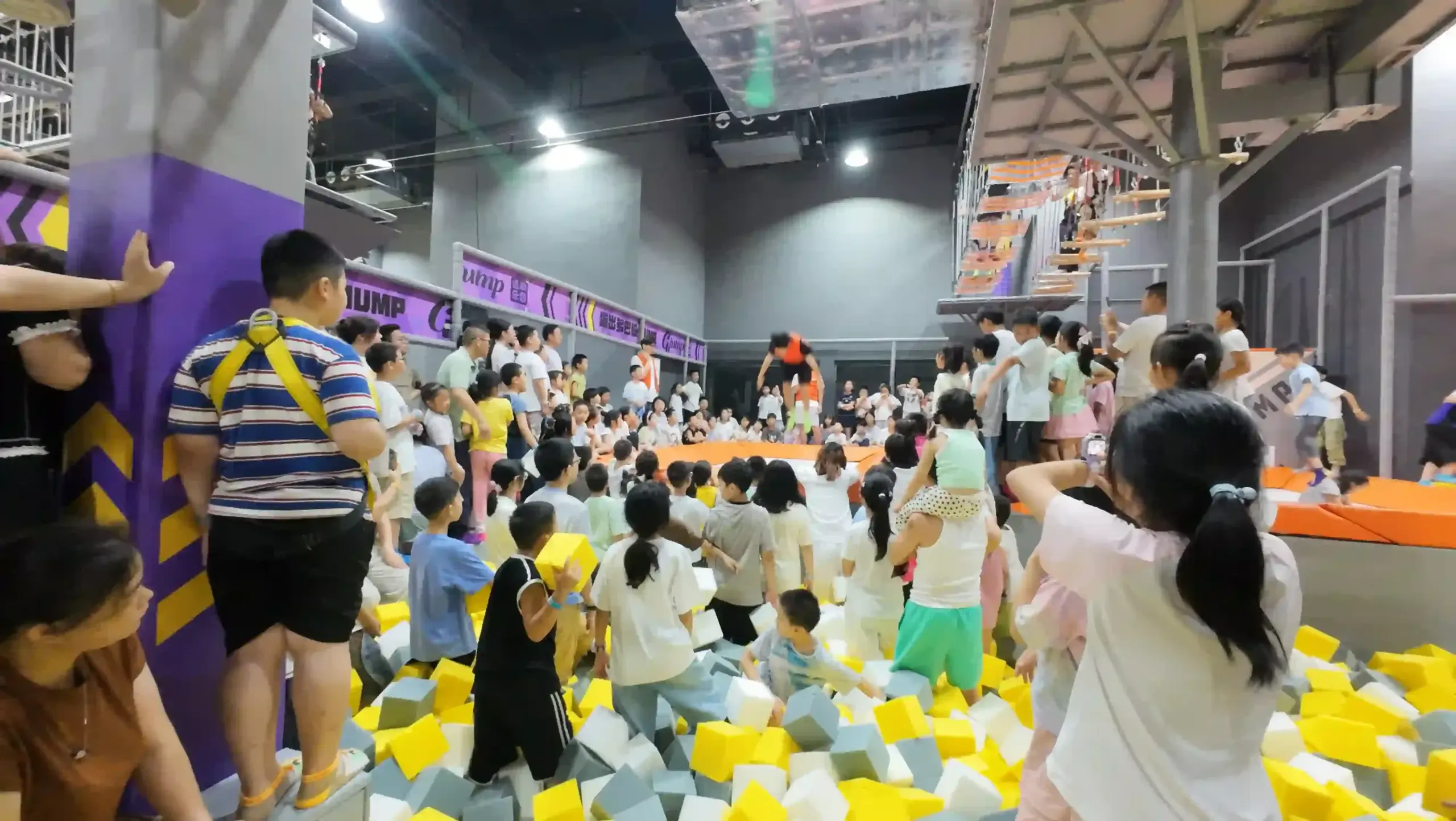
9. Equipment for Different Age Groups
One of the most important decisions is choosing equipment according to the target age group.
| Target Group | Common Equipment |
|---|---|
| Toddlers | ソフトプレイ, low slides, ボールピット, pretend play |
| Children 3–12 | ソフトプレイ, スライド, クライミング, 障害物コース, トランポリン |
| Teenagers | クライミング, 障害物コース, トランポリン, 冒険アトラクション |
| Adults & Families | ハイロープアトラクション, クライミング, flying trapeze, interactive attractions |
| All Ages | Mixed soft play, スポーツ, adventure and interactive attractions |
A mixed-age facility may therefore need several separate zones rather than one large playground structure.
10. How Much Equipment Does an Indoor Playground Need?
There is no fixed number of equipment types that every indoor playground needs.
A smaller venue may focus on:
ソフトプレイ + スライド + ボールピット + クライミング
A medium-sized commercial playground could add:
Obstacle Course + トランポリン + Pretend Play
A larger FEC may combine:
ソフトプレイ + トランポリン + クライミング + Ninja + Adventure + インタラクティブなアトラクション
The final equipment list should be determined by the available space, 天井の高さ, 対象ユーザー, 予算, local requirements, and overall business concept.
11. How Should Equipment Be Selected?
Before choosing specific equipment, a manufacturer normally needs several basic pieces of information:
- 床面積
- 天井の高さ
- Floor plan
- Column locations
- 入口と出口の場所
- 対象年齢層
- Expected customer profile
- Preferred playground concept
- Available investment budget
- Local safety and compliance requirements
The equipment should then be arranged into a practical layout rather than selected individually.
12. How Mizone Plans Indoor Playground Equipment
Mizone is a China-based manufacturer of commercial indoor playground and FEC equipment, focusing on customized indoor playgrounds, ソフトプレイシステム, トランポリンパーク, and indoor sports-entertainment projects.
Its project process can include:
- Site layout planning
- CAD-based customization
- Equipment design
- 製造業
- 出荷調整
- Installation guidance
- アフターサポート
The design can be adapted to different ceiling heights, 列, site dimensions, and themes.
This approach allows the equipment list to be developed together with the overall layout instead of treating each attraction as a separate purchase.
Final Answer: 屋内遊び場にはどのような設備が必要ですか?
A commercial indoor playground can include soft play structures, スライド, ボールピット, 登山用品, 障害物コース, トランポリン, pretend-play areas, and interactive attractions.
For larger FEC or indoor sports projects, additional attractions such as 忍者コース, high-rope adventure, flying trapeze, parachute attractions, and other interactive rides can be considered.
The right combination depends on the space, 天井の高さ, 対象年齢層, project concept, 予算, and safety requirements.
There is no universal equipment list for every indoor playground. A better approach is to start with the site and business concept, then build the equipment mix around them.
よくある質問
1. What equipment should an indoor playground have?
An indoor playground should typically include a combination of soft play structures, スライド, ボールピット, 登山要素, and age-appropriate activity areas. Depending on the project size and target customers, it may also include obstacle courses, トランポリン, pretend-play areas, interactive attractions, or adventure equipment. The right combination depends on the available space, 天井の高さ, 対象年齢層, 安全要件, and overall playground concept rather than simply filling the venue with as much equipment as possible.
2. What equipment is needed for a commercial indoor playground?
A commercial indoor playground usually needs core soft-play equipment combined with several activity types that encourage movement and longer play sessions. Common options include multi-level soft play structures, スライド, ボールピット, 壁を登る, 障害物コース, トランポリン, and role-play areas. Larger commercial projects can add high-altitude attractions, interactive equipment, or FEC-style entertainment. Equipment selection should also consider the venue’s dimensions, 天井の高さ, customer profile, circulation, safety zones, and the business model of the facility.
3. How do I choose equipment for an indoor playground?
Choose indoor playground equipment based on the target age group, 利用可能なスペース, 天井の高さ, 安全要件, and intended use of the venue. Younger children may need lower-level soft play, スライド, ボールピット, and role-play areas, while older children and teenagers can use climbing, obstacle, トランポリン, or adventure attractions. A professional layout should also consider circulation and activity zones so that different attractions work together instead of competing for the same space.
4. What equipment is suitable for different age groups in an indoor playground?
Different age groups should have equipment designed around their abilities and play needs. Toddlers generally need dedicated low-level soft play, gentle slides, and age-appropriate activity areas. Children can use larger soft-play structures, 登山要素, 障害物コース, and trampolines. Teenagers and adults may be better suited to climbing walls, advanced obstacle courses, and adventure attractions. Separating activity areas by age can help create a more suitable and manageable play environment.
5. Can a small indoor playground include different types of equipment?
はい, a small indoor playground can still combine several equipment types if the layout is planned efficiently. Instead of using one large structure, a smaller venue can combine compact soft play, スライド, climbing features, ボールピット, or a small activity zone. The available floor area and ceiling height are important when deciding what can realistically fit. 例えば, the project cases in the article include a 32㎡ climbing project and a 70㎡ indoor playground, showing that equipment solutions can vary significantly by site size.
6. Does ceiling height affect indoor playground equipment selection?
はい, ceiling height can significantly affect which indoor playground equipment can be installed. Low-ceiling venues may require compact, lower-level equipment, while taller spaces can accommodate multi-level structures and high-altitude attractions. The article’s project examples range from approximately 2.3m to 10m in height, demonstrating how equipment configurations change according to the building. Ceiling height should therefore be considered during the early layout and design stage rather than after equipment has already been selected.
7. Should an indoor playground include trampolines?
Trampolines can be a useful addition to an indoor playground, particularly when the project is designed to provide more active physical play. They can be integrated alongside soft play, 障害物コース, 登山エリア, or other attractions. しかし, they are not required for every playground. Whether trampolines are appropriate depends on the available space, 対象ユーザー, overall concept, 安全要件, and the way different activity zones are expected to work together.
8. What equipment is suitable for a family entertainment center (FEC)?
An FEC can combine children’s playground equipment with attractions designed for older children, ティーンエイジャー, and families. In addition to soft play, スライド, ボールピット, and climbing equipment, larger FEC projects may include trampolines, 障害物コース, ninja-style activities, high-rope attractions, flying trapezes, interactive rides, and other adventure attractions. The equipment mix should be planned around the venue’s size, 天井の高さ, target customer groups, and the overall entertainment concept.
9. How much equipment does an indoor playground need?
There is no fixed amount of equipment that every indoor playground needs. The appropriate quantity depends on the venue size, レイアウト, 天井の高さ, 対象年齢層, and the types of activities included. A well-planned playground focuses on creating complementary activity zones rather than maximizing the number of individual pieces. The goal is to provide enough variety and usable play space while maintaining appropriate circulation and safety areas throughout the venue.
10. Can indoor playground equipment be customized for a specific space?
はい, indoor playground equipment can be customized around the dimensions and structural conditions of a specific venue. Custom design may take into account floor area, 天井の高さ, 列, 入り口, circulation paths, and the desired theme. For larger projects, companies such as Mizone can use CAD layouts and 3D design to plan equipment around the available space. Customization is particularly useful when the building has irregular dimensions or when the operator wants a specific combination of play and adventure attractions.
11. What equipment should I choose for a new indoor playground project?
For a new project, start by defining the target customers, available floor area, 天井の高さ, and desired playground concept before choosing individual equipment. A typical starting combination can include soft play, スライド, クライミング, and ball-pit activities, followed by additional attractions such as trampolines, 障害物コース, role play, or adventure equipment where appropriate. For larger FEC projects, the equipment mix can be expanded to serve multiple age groups and create different activity zones.