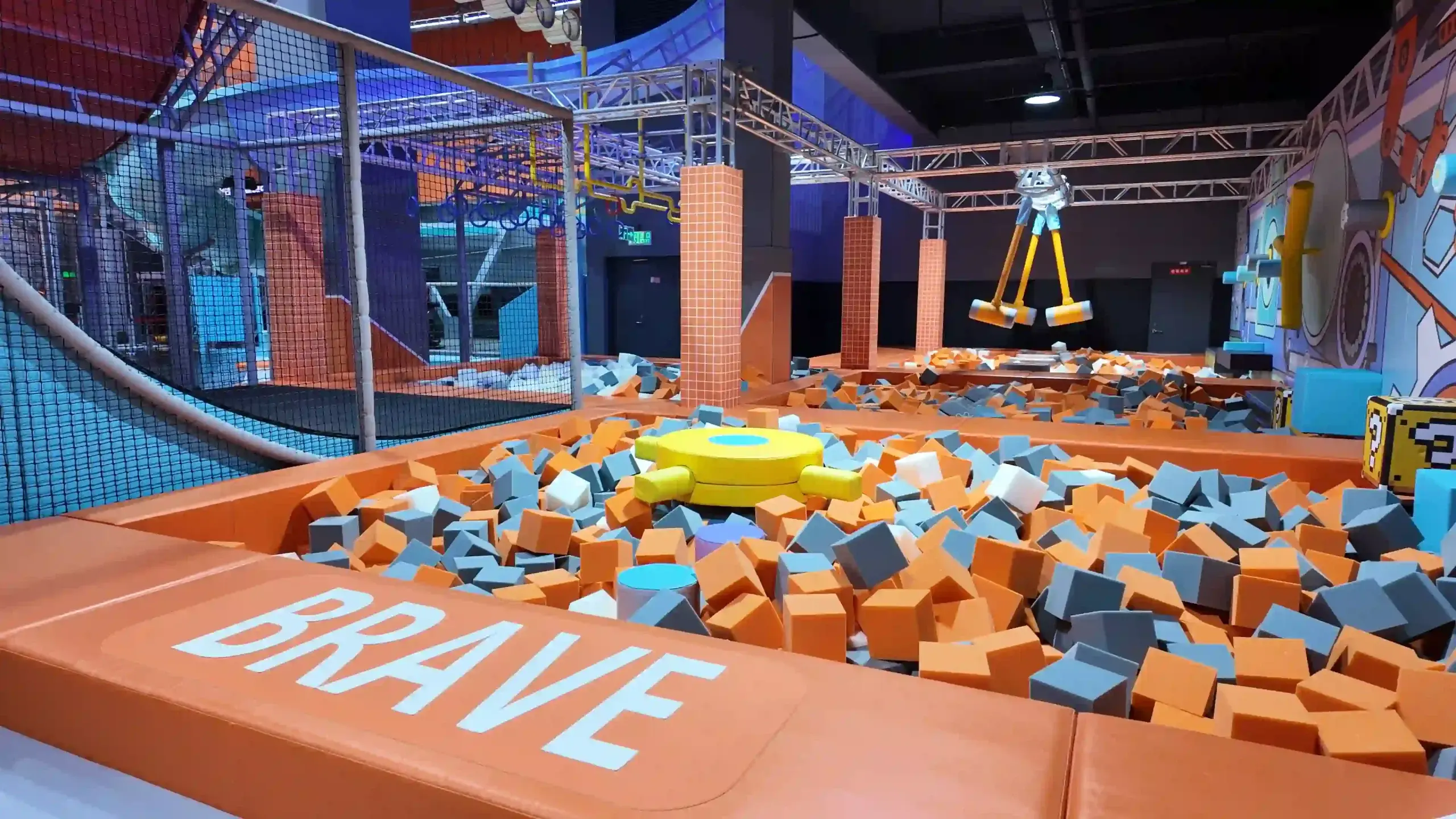
 Aire de jeux intérieure, Salle de sport tendance, Parc de trampolines, Parc de jeux d'aventure, Fournisseur fabricant de parc d'escalade

Démarrer une entreprise de jeux d'intérieur peut être une option pratique pour les investisseurs qui disposent d'un espace commercial approprié et souhaitent construire un lieu de divertissement familial.. Cependant, un projet réussi nécessite plus que le simple achat d’équipement de terrain de jeu.
You need to consider the emplacement, clients cibles, espace disponible, budget, mise en page, équipement, exigences de sécurité, installation, and daily operations avant l'ouverture.
Ce guide explique les principales étapes pour démarrer une entreprise de jeux d'intérieur.
1. Define Your Business Concept
Start by deciding what type of indoor playground you want to operate.
Les options courantes incluent:
- Indoor soft play playgrounds for children
- Parcs de trampolines
- Ninja and obstacle courses
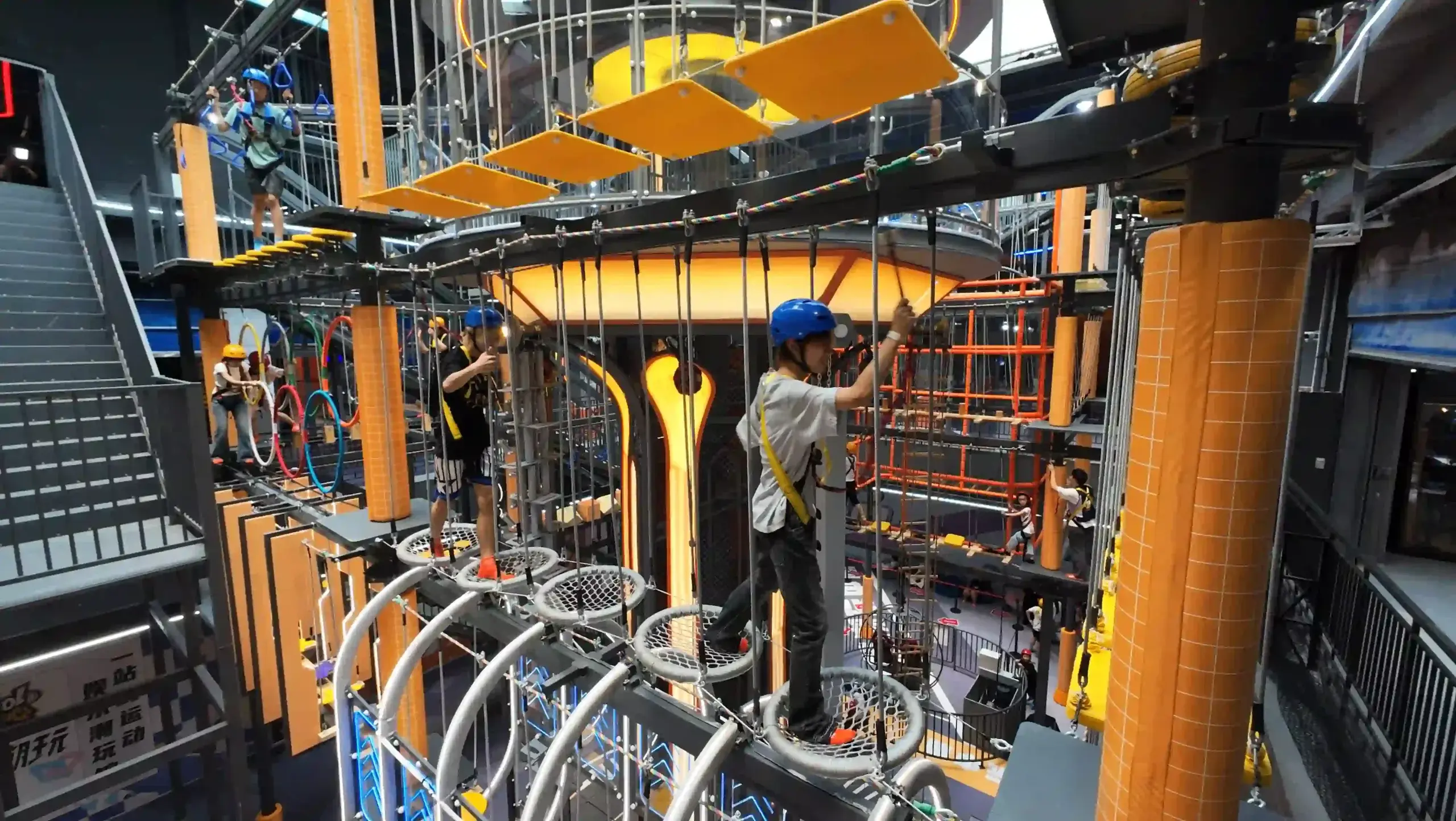
- Climbing and adventure areas
- Centres de divertissement familial (FEC)
- Multi-attraction indoor entertainment venues
Your concept should match your local market, espace disponible, groupe d'âge cible, et budget d'investissement.
Par exemple, une petite salle peut se concentrer sur le jeu doux, tandis qu'une salle plus grande peut combiner un jeu doux, trampolines, attractions d'escalade, jeux interactifs, and other entertainment activities.
2. Find a Suitable Location
The location can have a major impact on the potential performance of an indoor playground.
Before signing a lease, check:
- Total available floor area
- Hauteur du plafond
- Floor loading capacity
- Columns and structural obstacles
- Entrance and emergency exits
- Parking and accessibility
- Nearby residential areas, écoles, centres commerciaux, or family destinations
The ceiling height is particularly important because it can determine which attractions can be installed.
Par exemple, high-rope attractions and some large climbing structures may require significantly more vertical space than a standard soft-play playground.
3. Set Your Investment Budget
Your budget should cover more than playground equipment.
Typical project costs may include:
- Playground equipment
- Interior decoration
- Design and engineering
- Shipping and logistics
- Installation
- Safety and compliance requirements
- Rent and deposits
- Staff and operating costs
- Marketing before opening
- Maintenance and spare parts
Instead of deciding on equipment first, it is better to determine your total investment range and then develop a playground solution around the available budget.
4. Plan the Layout Before Ordering Equipment
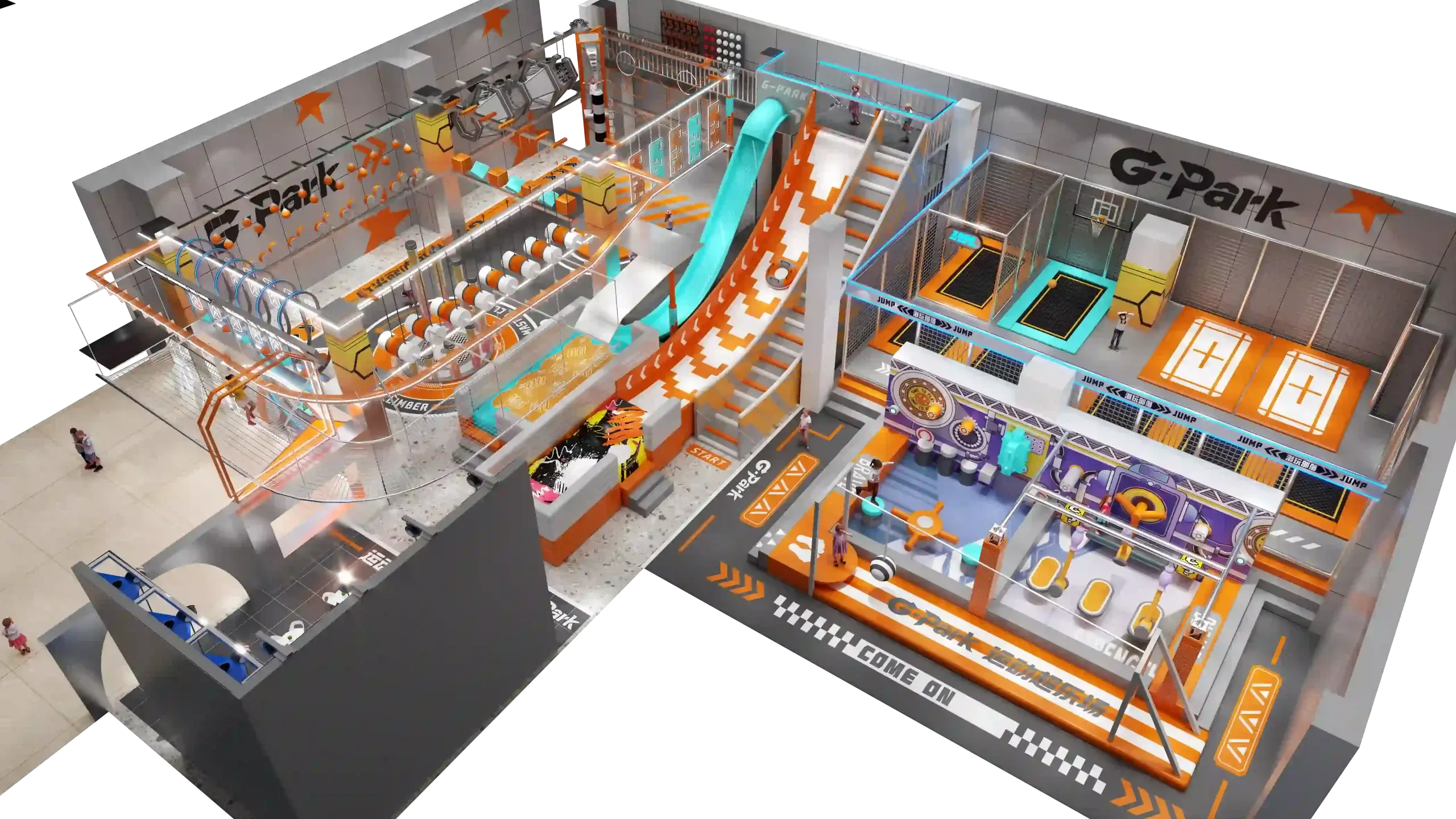
Once you have a site, create a detailed layout based on the actual dimensions and structural conditions.
A professional playground manufacturer can use CAD drawings to plan:
- Equipment locations
- Circulation routes
- Entry and exit points
- Different age zones
- Staff observation areas
- Safety distances
- Seating and parent areas
Pour des projets personnalisés, the design should also consider the ceiling height, colonnes, entrées, and other site restrictions.
5. Choose the Right Playground Equipment Manufacturer
Choosing the right supplier is one of the most important decisions in the project.
Do not compare manufacturers only by equipment price. Check their:
- Manufacturing capability
- Custom design experience
- Product range
- Safety certifications
- Overseas project experience
- Assistance à l'installation
- Service après-vente
- Ability to provide a complete project solution
For larger customized projects, working directly with an experienced manufacturer can simplify the process. Aire de jeux Mizone, Par exemple, provides indoor playground design, fabrication d'équipement, coordination des expéditions, conseils d'installation, and after-sales support as part of a one-stop project solution. Its project experience includes indoor playground and trendy sports projects in markets such as Saudi Arabia, Qatar, Tadjikistan, and South Korea.
A factory that can handle design, production, coordination des expéditions, conseils d'installation, and after-sales support can simplify the project management process.
Is Mizone Suitable for Your Project?
Mizone may be suitable for investors planning customized indoor playgrounds, multi-attraction entertainment centers, or projects that require site-specific design and equipment integration. It may be less suitable for very small projects that only need standard off-the-shelf equipment or replacement components.
6. Confirm Safety and Compliance Requirements
Before production, confirm which safety standards and certifications apply to your project and destination market.
Selon l'équipement et le marché, buyers may need to check standards or certifications such as EN 1176, ASTM, ASC, or ISO-related quality systems.
Do not simply accept a general statement that equipment is “certified.” Ask the manufacturer which certification applies to which product and request supporting documentation.
7. Manufacture, Ship and Install the Playground
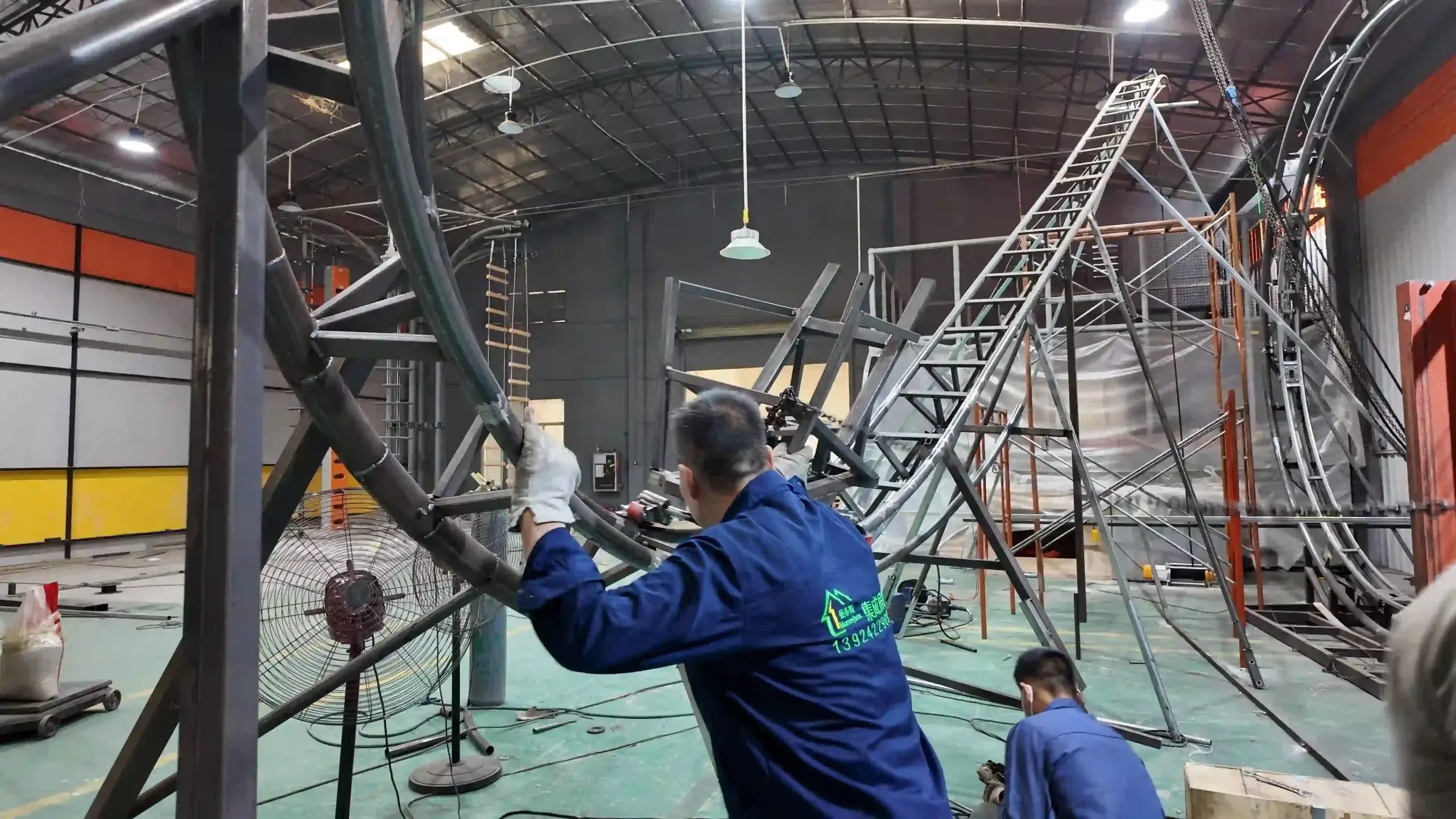
After the design is confirmed, the manufacturer can begin production.
The project process normally includes:
Design → Production → Quality Inspection → Shipping → Installation → Final Inspection
Pour les projets à l'étranger, clarify in advance who is responsible for installation.
Some manufacturers provide overseas installation teams, while others provide installation drawings, manuals, conseils techniques, and cooperate with local installation contractors.
8. Prepare for Opening and Operations
Equipment alone does not create a successful playground business.
Avant l'ouverture, prepare:
- Staff recruitment and training
- Safety inspection procedures
- Ticketing and membership systems
- Cleaning and maintenance procedures
- Marketing campaigns
- Birthday party or group-event packages
- Social media promotion
Think about how customers will use the venue and how the business can generate repeat visits.
How Much Space Do You Need?
There is no single ideal size for an indoor playground.
Based on available project examples, indoor playground projects can range from small venues to large multi-attraction entertainment centers.
Par exemple, Mizone’s documented projects include a 70 m² Saudi soft-play project, un 700 m² Saudi indoor project, un 1,000 m² Tajikistan project, et un 1,915 m² Saudi project with attractions for all ages.
This shows why the equipment solution should be developed according to the actual site rather than using the same package for every project.
Should You Work With a Factory or a Local Distributor?
Both options can work, depending on your project.
A local distributor may be convenient for small standard purchases and local service.
A direct manufacturer can be useful when you need:
- Conception personnalisée
- Multiple types of attractions
- Project-specific manufacturing
- Large-volume equipment
- Direct communication with the production team
- Integrated project coordination
For medium-to-large customized projects, comparing the manufacturer’s actual production capability and project experience is important.
Liste de contrôle finale
Avant de passer une commande, make sure you have confirmed:
☐ Business concept
☐ Target customers
☐ Site and ceiling height
☐ Investment budget
☐ 2D/CAD layout
☐ Equipment list
☐ Safety requirements
☐ Manufacturer qualifications
☐ Production timeline
☐ Shipping plan
☐ Installation responsibility
☐ After-sales support
☐ Opening and marketing plan
Starting an indoor playground business is therefore a project planning process, not simply an equipment purchase. The best starting point is to define your site, clients cibles, and investment range first, then develop the equipment and design solution around those conditions.